



Repak was Irelands first voluntary initiative between industry and the countrys Department of the Environment and is designed to meet industrys producer responsibility obligations under the EU directive on packaging and packaging waste.
Despite the success in reaching the 65% level, the amount of packaging waste material in tonnage terms collected in 2010 via Repak for recycling or energy recovery fell by 2.8%, knocking Repaks revenues which were down 6.4%. The organisation said that, in 2010, 26.3 million Euros were raised as income from Repak packaging levies from participating member companies.
During the year a total of 28.2 million Euros was spent on supporting the equivalent recovery/recycling of 140 kilos of used packaging per person.
Decline
There was a 3.6% decline in the amount of packaging reported to the scheme by participating members as placed on the market, which is seen as reflecting the overall decline in economic activity in Ireland.
All of the different packaging materials volumes recycled/recovered were down in 2010 by an average of 2.8% overall with the exception of used plastic which grew by 12%. Glass experienced the single biggest drop from 2009 down by 9%, primarily due to the effect of the poor weather on bring collections and the closure of the Rehab Glassco glass processing facilities for three months in the latter quarter of 2010.
The mix of materials collected was:
- Paper 46.1% (288,911 tonnes)
- Glass, 17.1% (106,629 tonnes)
- Wood 15.5% (96,783 tonnes)
- Plastic 14.2% (89,130 tonnes)
- Steel 6.6% (41,292 tonnes)
- Aluminium 0.5% (3,356 tonnes)
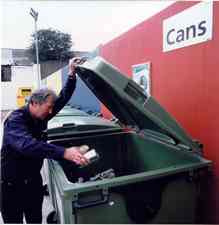
Repak has funded bring bank schemes such as this one for cans
RDF
The increase in plastic recovered/recycled is linked to a 64% increase in RDF (refuse derived fuel) production. Repak explained that the majority of RDF (both paper and cardboard) was commercial waste that was unsuitable for traditional recycling due to levels of contamination (e.g. meat juices on cardboard)-RDF is currently used as a fuel substitute by companies such as Lagan Cement in itskilns.
Andrew Hetherington, chief executive of Repak said: Reflecting the general economy, last year was a challenging one for Repak with decreasing fees, increased recycling costs, potential higher targets, lack of enforcement and extremely low landfill charges, all making recycling less attractive. The successful packaging recovery rate of 65% also masks the fact that Repak recovered almost 117% of the used packaging our members put on the market. With greater participation and compliance through Repak we could achieve higher recycling and recovery rates.
Related links
Looking ahead, Dr Hetherington added: 2011 is an extremely important year for packaging recycling in Ireland as we need to recycle a minimum of 55% and recover 60% of used packaging in order to achieve the 2011 EU Used Packaging Targets and avoid potential fines.
“Starting each year we start from zero, certainty of future strategy is crucial, and Repak are confident of meeting and surpassing the 2011 EU targets. With this in mind we welcome the announced review of Producer Responsibility Initiatives (PRI) in Ireland but urge no decision be made on other areas, such as a possible packaging tax, in isolation of the completion of this review.


Register for free to comment