


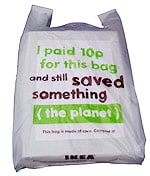
The Swedish chain revealed that early indications of its levy, charged since June (see letsrecycle.com story), suggest the 32 million bags given out to customers each year looks set to be slashed to just 900,000 this year.
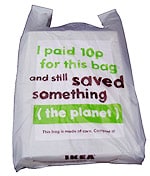 IKEA is introducing compostable bags made from corn starch, which avoid the use of fossil fuel plastic |
Today saw the five pence levy for each bag increased to 10 pence, with IKEA launching a new “compostable” bag made from corn starch.
While some plastic bags marked “degradable” just break down into small plastic fragments, IKEA said its corn starch bags will naturally break down in a compost bin. The company said it had taken the decision to use corn starch for its bags in order to reduce the use of plastic made from non-renewable crude oil.
IKEA is aiming to reduce the estimated 17 billion plastic bags given away by UK retailers each year. From October, IKEA said it expects its use of plastic carrier bags to end “completely”.
Money from the bag levy is being donated to regeneration group Community Forests.
“Huge reductions”
Charlie Browne, environment manager at IKEA UK, said: “Since we started charging for carrier bags back in June the scheme has been a fantastic success. Over night we saw huge reductions in consumption and all indications are that we will have reduced our consumption by 97% from 32 million last year to 900,000 this year which is far beyond our original expectations.”
Mr Brown added that customers had been “overwhelmingly supportive” of the bag levy scheme, particularly because the profits were going to an environmental charity.
“The next logical step for us was to take traditional fossil fuel plastic out of the equation,” he said.
Starch carrier bags were tried by supermarket chain Sainsburys back in 2003, but without much success (see letsrecycle.com story). The supermarket said the idea had not caught on with its customers, and that the bags had been expensive.


Register for free to comment