




Hopefully the new government will listen and appreciate that recycling is a good thing only if you get a net environmental gain
Jane Bickerstaffe, INCPEN
The organisation, which has members from all parts of the packaging supply chain, claims that packaging levels are already above the European average and that substantially higher targets should not be introduced for their own sake.
The comments came in a response to Defra's consultation on 'Implementing the Packaging Strategy', which was launched in March and closes today (May 27).
The consultation proposes new recovery and recycling targets for packaging waste for 2011-20 for obligated businesses alongside strengthened reporting and transparency provisions and technical changes (see letsrecycle.com story). Targets include a goal to recycle or recover 72% of packaging waste by 2020 – requiring obligated businesses to pay towards the recycling or recovery of 84% of material, to cover smaller businesses which are exempt.
However, INCPEN questioned whether these targets would be environmentally beneficial or cost-effective, especially when other European countries' rates were settling down at lower levels – claiming that, of the top-performing four countries of Germany, Austria, the Czech Republic and Belgium, only Belgium had already exceeded the UK's ambition by achieving an 80% recycling rate.
The proposed material-specific targets for plastics, which rise from 23% in 2011 to 57% by 2020, caused particular concerns.
Jane Bickerstaffe, INCPEN director, explained that her members were “crying out” to get recovered PET from bottles but that it was almost impossible to get in the UK because other plastics, such as yoghurt pots and plastic film, were getting into the waste stream and creating contamination problems.
She said: “Targets at this level are daft. For plastics it will mean going beyond bottles which will exacerbate the quality problem. We don't want it to mess it up from a local authority point of view either.
“Quality should be the top priority. The targets can go up a bit but this seems ridiculous.”
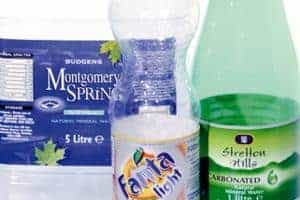
Pubs, clubs, hotels and restaurants should also be encouraged by the government to collect colour-sorted glass, it said.
Carbon
INCPEN also hit out at the consultation document for not taking the beneficial effects of using packaging to extend the life and preserve the quality of food and drink in its carbon calculations, adding that they were based on WRAP's carbon methodology which it said had been widely criticised.
It claimed that carbon should not be used as the single most important measure, just because of the current trend, and that wider sustainability issues should be taken into account.
Setting targets 10 years in advance was also problematic, the organisation said, as it was becoming increasingly difficult to forecast ahead when the use of packaging and waste treatment systems was likely to change.
The consultation response said: “If a 10 year target needs to be set it should only be an aspiration. It would be advisable to set actual targets only to 2015, which also happens to coincide with the European Commission's next review of the Packaging & Packaging Waste Directive.”
Government
Looking ahead, Ms Bickerstaffe said she hoped the new government would endeavour to look at the wider picture and appreciate that more recycling, as an industrial process, was not the only answer and that energy recovery also made sense for some material.
She said: “Hopefully the new government will listen and appreciate that recycling is a good thing only if you get a net environmental gain. For cruddy, food contaminated lightweight material it doesn't make sense but that does mean it is not environmental. We need a more sophisticated approach to this.”

Register for free to comment