


The challenges associated with flats recycling are not an excuse for poor recycling performance in some of Londons boroughs, according to a report published today (October 11) by the London Assembly.
In the Waste not, want not – A review of why recycling rates vary across London study, the Assembly states that, while high-density housing such as flats does affect recycling performance, it does not necessarily prevent a borough from recycling more.

Instead, the Assembly calls for more to be done to publicise to householders the savings that can be made by recycling more and sending less waste to landfill. The Assembly is an elected body tasked with scrutinising the work of the Mayor of London Boris Johnson.
It currently costs 580 million per year to manage Londons waste, of which around 250 million goes in landfill costs. It has been estimated that if London recycled 60% of its waste, 63 million could be saved each year.
The report advocates stronger leadership to motivate householders to recycle and recommends that more boroughs publish data about the value of recycling annually. It also urges the Mayor to promote schemes that reward communities for increasing recycling.
Varying recycling rates
Currently, Londons boroughs recycle on average 32% of their household waste, compared to a 39% average nationwide. The report specifically looked at the varying recycling rates in the capital, with some boroughs achieving rate of more than 40% while others are nearer 20%.
The report noted that lots of flats and estates did create a specific challenge for boroughs to improve recycling, because of a lack of space for storage and difficulties transporting materials to collection points.
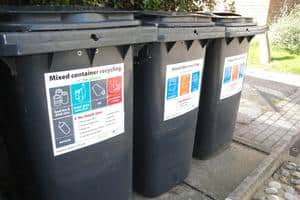
But, it highlighted the performance of Tower Hamlets, which had reached a 20% recycling rate with despite 84% of its properties being flats double the average rate achieved across flats and estates in London as a whole.
Deprivation
It also questioned the impact of deprivation on recycling performance, suggesting its significance may have been overstated.
Although income levels are important, they are not the overriding factor in determining recycling levels, the report concluded.
Some London boroughs with high levels of deprivation recycle more waste than might be expected, while other more affluent areas achieve lower-than-anticipated recycling rates.
Assembly Member Gareth Bacon, who led the inquiry that produced the report on behalf of the London Assembly Environment Committee, said: London needs to recycle more of its rubbish to reduce the economic and environmental costs of sending so much waste to landfill. Millions of pounds could be saved every year if we recycled more.
Certain areas of the capital do face specific challenges, such as having lots of flats, however this should not be seen as an excuse for failing to recycle more. Deprivation is not an insurmountable barrier either.
He added: If the savings that could be made are publicised, I think Londoners will pitch in and recycle even more. I urge the Mayor and boroughs to build on work already done and better communicate the enormous benefits of recycling.
Waste disposal
Related links
The report also raises concerns over the governance of waste disposal, which for 21 boroughs, takes place through Joint Waste Disposal Authorities (JWDA).
This system, which the report says has been frozen in time since the abolition of the Greater London Council in 1986 does not appear best suited to boost recycling rates, with only two of the four JWDAs believing they will meet the 50% recycling target expected under the revised Waste Framework Directive by 2020.


Register for free to comment