


Councillor Seán Woodward, has taken over the helm of Project Integra for the next 12 months from Fareham borough councillor Leslie Keeble.
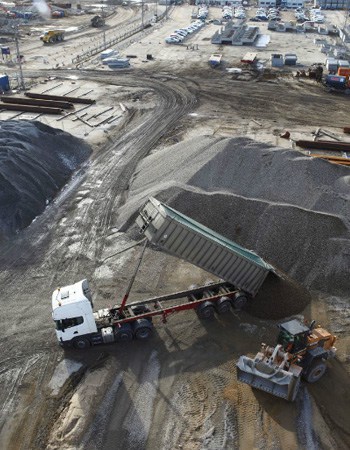
In his first act as chair of the organisation, he has written to Defra minister Rory Stewart to appeal for material from incinerator bottom ash (IBA) that is not sent to landfill to be classified as ‘recycled’ – in line with the Welsh Government and other EU Member States.
The move would help local authorities in England who are struggling to meet the 50% by 2020 recycling target, Cllr Woodward claims.
IBA is the ash that is left over after waste is burnt in an incinerator. The material can contain glass, brick, rubble, sand, grit, metal, stone, concrete, ceramics and fused clinker as well as combusted products such as ash and slag.
Typically IBA is removed from an EfW furnace after incineration, and large objects, such as stones, bricks and metals are screened out and recycled or reused where possible.
Ash
The remaining ash is then characterised by the plant operator as either hazardous or non-hazardous and taken off site for disposal or reuse. Non-hazardous IBA can then be processed into a secondary aggregate and used in road sub base, a bulk filler for construction and in cement bound materials.
The majority of the residual waste treated on behalf of the Project Integra authorities is handled at Veolia’s South East Energy Recover Facility (ERF) near Portsmouth. IBA extracted from the process is used as a building aggregate, after processing by Raymond Brown Aggregates, based in Hampshire.
In England the use of IBA in England is classified as a ‘disposal’ activity, although Project Integra is now appealing for this material to be classed as ‘recycled’ in order to boost its recycling rate, which stood at around 35% for 2014/15. Project Integra’s recycling rate has slipped slightly in recent years, having reached a high of 38% in 2008/09.
Cllr Woodward, who is also the leader of Fareham council, said: “We are very proud of the amount of waste we divert from landfill in Hampshire, and are committed to increasing diversion as far as we can.

“The EU has set Member States recycling targets, and while I support the idea of targets, this is a particularly tough target to meet when recycling classifications are inconsistent. In Hampshire, IBA is processed and re-used, it doesn’t go to landfill and it should, therefore, be classed as recycling.
“So I would ask the government to give us a level playing field with the rest of the UK and Europe, and a fighting chance to meet our recycling targets – we estimate that England’s recycling rate would increase by around 5% if IBA is included.”
Project Integra comprises the 11 district and borough authorities within Hampshire, Hampshire county council, Portsmouth and Southampton councils, and the authority’s waste collection contractor Veolia.
Cllr Woodward added: “Project Integra is a very successful waste partnership for Hampshire, and I am determined to use my chairmanship over the next year to ensure we are well placed to tackle the issues of waste and recycling in the future as population and housing numbers continue to grow. I am keen to see a clear policy direction from the government that will provide the industry with the confidence to invest and to develop new material streams for recycling.”

Register for free to comment