

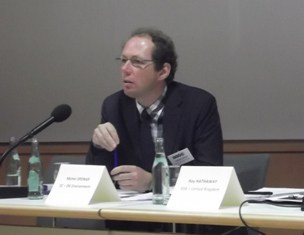
Michel Sponar, a policy official from the waste section of the European Commissions DG Environment, said it was estimated there were nine to 16 Member States currently expected to meet the 50% recycling target for municipal solid waste (MSW) set under the Waste Framework Directive.
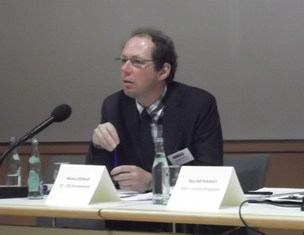
And, Mr Sponar noted that while there were several Member States who have reached or exceeded targets set under EU legislation there were even more lagging behind the requirements of the environmental legislation. In particular, he said Member States were struggling with biodegradable waste diversion targets set under the Landfill Directive, even taking into account the 14 Member States that benefit from a four year exemption from the targets.
The comments came during a discussion on the Consultation on the Review of the European Waste Management Targets. This took place at a meeting of the European Group of the International Solid Waste Association (ISWA) hosted by the European and Economic and Social Committee in Brussels on September 3 and 4. Representatives from 17 countries were in attendance.
The consultation on EU waste targets, headed up by UK-based consultancy Eunomia, closed in September (see letsrecycle.com story). It sought views on whether there is a need to change the targets in line with the Commissions aspirations outlined in the Resource Efficiency Roadmap.
Targets
The proposal for setting a maximum level for energy from waste was raised with Mr Sponar, who suggested that the Commission would adopt a pragmatic approach, explaining that it would instead prefer to set higher recycling targets with EfW becoming the main option for residual waste treatment in Member States.

As for phasing out landfill, Mr Sponar offered an example of 10% being the limit on the amount of waste that should be allowed to be landfilled in the longer-term future. He added that a clear definition as to what constitutes residual waste would be needed.
Other countries
Poland, Lithuania, Estonia and Sweden were also put under the spotlight at the meeting, with presentations highlighting the progress of their waste management schemes. These were presented furing a session entitled Waste hierarchy, how to move up the hierarchy: difficulties, challenges and successes.
Discussing Swedens success, Hakan Rylander, chief executive of Sysav the second largest of Swedens inter-municipal waste management companies serving 14 municipalities noted that it had taken the country more than 20 years to get to the position where in 2012 landfill accounted for only 0.7% of MSW disposal. At that time the country energy-from-waste accounted for 51.6% of treatment, biodegradable treatment 15.3% and recycling 32.3%. This is mainly due to Swedens landfill ban on burnable wastes which was introduced in 2000 followed two years later by a ban on organic waste going to landfill.
Elsewhere, Jolia Kruopiene, associate professor and senior researcher from the Kaunas University of Technology, said Lithuania still had a way to go to meet the EYUs requirements. In 2011, 79% of the countrys MSW was landfilled, 2% composted and 19% recycled.


Register for free to comment