



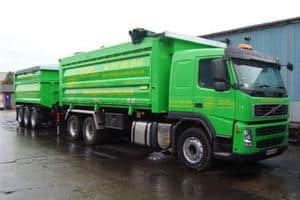
The material is collected using a purpose-built grab truck, which is designed to remove the need for taking away and replacing skips and containers.
The service is being rolled out ahead of changes to guidance surrounding material with a gypsum content coming into place from April 1 2009.
Previously, due to its high sulphate-bearing, the landfilling of gypsum together with biodegradable waste had been prohibited but construction waste with a “small content” had been allowed.
However, the Environment Agency announced in November 2008 that plasterboard with gypsum content would have to be separated from other material for reuse, recycling or landfilling after it found it could not define “an acceptable limit” for gypsum content in waste (see letsrecycle.com story).
Gypsum Recycling said that its ‘crane and grab' will enable it to collect big bags or segregated skips of plasterboard waste to recycle at its gypsum recycling plant in Rochester.
Mark McGowan, sales director at Gypsum Recycling, said: “The collection system is based on the usage of a purpose built plasterboard waste grab truck, that significantly reduces one of the inherent problems of transporting plasterboard waste: it is bulky, but does not weigh a lot, making the transport cost per tonne of waste much more significant than for other waste streams.”
Gypsum
Gypsum Recycling currently offers plasterboard recycling services to companies and local authorities in Wales, the Midlands, London, and both Northern and Southern Ireland – where it has already introduced the crane and grab system.
Collected plasterboard is then processed by Gypsum Recycling through a separation and sorting machine. The machine segregates the paper lining, wood and metal fractions from the plasterboard, leaving powdered gypsum.
Recycled plasterboard is able to be used as a raw material in the manufacture of new plasterboard and plasterboard products; as a soil treatment agent for use in agriculture; and as an additive in cement clinker.
The development of legislative guidelines for recycled gypsum comes in the wake of the first standard for reprocessed plasterboard – the PAS-109:2008 – being launched by WRAP at the end of September 2008 (see letsrecycle.com story).
Development of the PAS-109 standard is being coupled with further work on the recyclability of plasterboard, with a consultation on a draft Quality Protocol having closed at the end of January 2009.
Councils
More and more councils have started to provide plasterboard recycling services in light of changes to legislation and demand from residents for more recycling services.
Last month (February 20), Croydon council announced that it would be accepting waste plasterboard at three of its household waste and recycling centres run by waste management company Environmental Waste Controls alongside hessian-backed carpet.
Councillor Phil Thomas, cabinet member for the environment, said: “I know the residents have been keen to see the introduction of facilities for both these materials, particularly the keen DIYers, so they'll be happy that they can now take them to their local reuse and recycling site safe in the knowledge that they will be recycled and given a new, productive life.”

Register for free to comment