

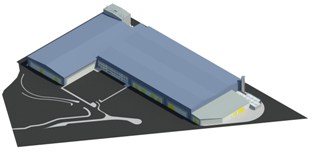
Work on the site was stopped in February after construction workers reportedly suffererd from respiratory problems and nosebleeds. Chemical experts were called in to take soil samples from the area, which was formerly the site of a zinc smelting works used to manufacture mustard gas and munitions during the First World War.

However, a spokesman for Bristol city council yesterday (June 26) confirmed that soil tests carried out by the Defence Science and Technology Laboratory (DTSL) and land quality specialists Hydrock had found that no traces of mustard gas were present, and that work could proceed on the site. The cause of the workers symptoms has not been identified but the tests did highlight the presence of heavy metals in the soil.
When completed, the site will house SITAs Bristol Resource Recovery Park which will include the planned plastic-to-diesel facility as well as a gasification facility capable of treating 100,000 tonnes a year of residual waste and an 80,000 tonne capacity materials recycling facility (MRF).
The company had hoped to have the plastics facility operational in time to produce fuel for vehicles at the Olympic Games, but the delay has meant that the expected completion date has been pushed back.
Findings
The council spokesman said: “The sampling and subsequent analysis on plot M2 is now complete. The samples taken by DSTL found no evidence of mustard gas or munitions. The findings of the samples taken by Hydrock concur with results from previous investigations and highlight the presence of heavy metals within the site soil. The investigation has not identified the causes of the symptoms experienced on the site.
“The remedial strategy for this site is currently being finalised and ground works are to start again shortly. Prior to works commencing the construction company will undertake additional risk assessments for the ground workers. All works will be proceeding with caution and anything unexpected will be reported immediately.”
Plans
SITA UK gained planning permission for the plastic-to-diesel plant in August 2011 (see letsrecycle.com story). The facility is being developed in partnership with Irish based technology company Cynar and will use a combination of shredding and pyrolysis technology to process around 6,000 tonnes per year of waste plastics from household waste and commercial and industrial sources.
Each tonne of plastic processed will be able to produce around 700 litres of diesel.
Under the deal with Cynar, signed in November 2010, SITA UK will build a total of 10 plastic-to-diesel around the UK, aiming to process a total of 60,000 tonnes of waste plastics per year.


Register for free to comment