


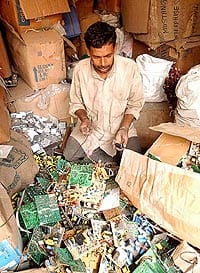
The campaign specifically aims to reduce the amount of toxic materials that workers in the Far East are exposed to when recycling goods shipped in from Europe and America.
 A worker in a recycling yard in Delhi processing electronics waste |
This week saw the publication of new research from the international pressure group, investigating the hazardous chemicals found in scrap yards where electronic waste is recycled in China and India.
The report, Toxic Tech: Recycling of electronic wastes in China and India: workplace and environmental contamination, claims that concentrations of lead in dust samples collected in recycling workshops in China was hundreds of times higher than typical levels.
Although the report was “not an exhaustive study of e-waste recycling facilities in either country”, it said both wastes and hazardous chemicals used in the processing “are commonly handled with little regard for the health and safety of the workforce or surrounding communities”.
As Europe brings in the WEEE Directive, making producers responsible for the collection and recycling of waste electrical and electronic equipment, Greenpeace is now urging manufacturers to commit to reducing the amount of heavy metals in the new products they make.
Design
Dr Kevin Brigden, who collected some of the samples from Chinese recycling workshops, said: “The data reinforces the need for the electronics industry to eliminate the use of harmful substances in their products at the design stage and take responsibility for their products at the end of their lifecycle.”
The pressure group said that Samsung, Nokia, Sony and Sony Ericsson have made commitments to eliminate the use of hazardous chemicals such as PVC and brominated flame retardants in the manufacturing of their products. LG Electronics has also recently committed to eliminating hazardous chemicals in their products.
Greenpeace has criticised companies including Dell, IBM, Hewlett Packard, Siemens, Toshiba, Panasonic and Apple because they “have so far failed to commit”.
| Related links: |
Greenpeace campaigner Zeina Alhajj said: “with the most recent commitment of LG, the five “first in class” companies in the electronics sector – with 55% share of the global mobile telephone market and Sony, which is leader in the electronics industry – show that it is possible to make electronic equipment without the use of these hazardous substances and still remain profitable.”
Research from Industry Council on Electronic Equipment Recycling in 2004 found that about 160,000 tonnes of electrical waste was being exported from the UK (see letsrecycle.com story).


Register for free to comment