

Council chiefs in the South West city are aiming to axe food waste in residual bins by 75% and produce the lowest amount of refuse per person of any UK city.
This pledge has been coupled with ambitious targets to achieve a 70% recycling target by 2025 – above the level recommended in the European Commission’s Circular Economy Package.
The new Waste and Resource Management Strategy replaces the council’s 2009 Waste and Streetscene Strategy to reflect changes in European and UK legislation as well as local context over the last seven years.
In 2013, Bristol was crowned the European Green Capital for 2015 – beating competition from Brussels, Glasgow and Ljubljana – the capital of Slovenia. The title rewards cities that have achieved high environmental standards and committed to further improvement.
But in the new strategy report, delivered to the Mayor for approval earlier this week (1 March), the council admits that since its last boost in recycling – when Bristol introduced weekly food waste and cardboard collections and a fortnightly residual waste service in 2006 – progress has slowed. Last year the city achieved an average overall recycling rate of 43.5%.
The authority also decided to terminate its outsourced collections contract in August 2015, opting instead to establish the wholly-owned Bristol Waste Company Limited to deliver the service for two years while it considers a long-term model.
The report goes on to reveal that the city is “not doing so well” in terms of food waste recycling – which constitutes 39% of all household material in the residual waste bin.
Landfill
And Bristol’s landfill rate, while below 30% last year, still places it below cities such as Birmingham, Nottingham or Sheffield – which the council adds all have access to some form of energy recovery facility.
In order to reduce the amount of residual waste arisings from around 236kg to below 150kg per person, the council is to examine best practice from other parts of the UK and elsewhere in Europe – such as the Italian province of Treviso where residents only produce 53kg of refuse per year.
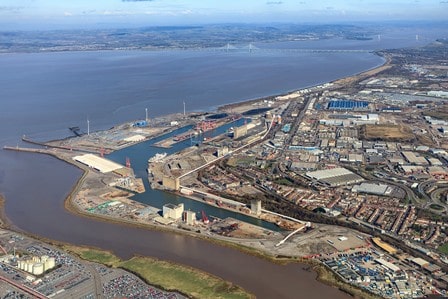
And, to bring the city’s landfill rate down to less than 5% by 2030, the council is to continue with its contract to ship refuse derived fuel (RDF) processed at Avonmouth to Europe – with a disposal saving of around £250,000 per year.
The arrangement, which was signed with Boomeco in June 2015, is now undertaken by Veolia which purchased the company when it was placed into administration in December (see letsrecycle.com story).
To improve food waste recycling and minimisation, the council is elsewhere exploring ways its waste framework can support Bristol’s Good Food Plan – which promotes local food production in the city and the West of England sub-region. It will also reinforce its communication with residents to place their food waste in the brown bins provided.
Adoption
The report adds: “Following the adoption of this strategy, an options appraisal process will be undertaken (looking at global best practice as to how best we can deliver the services and changes required) and a number of action plans produced, detailing how the council and its partners will deliver on the proposed objectives.
“Seeking to change our behaviour and how we all think about waste and resources in the city is no small task, but, following its Green Capital year, it is one that Bristol will aspire to.”

Register for free to comment