

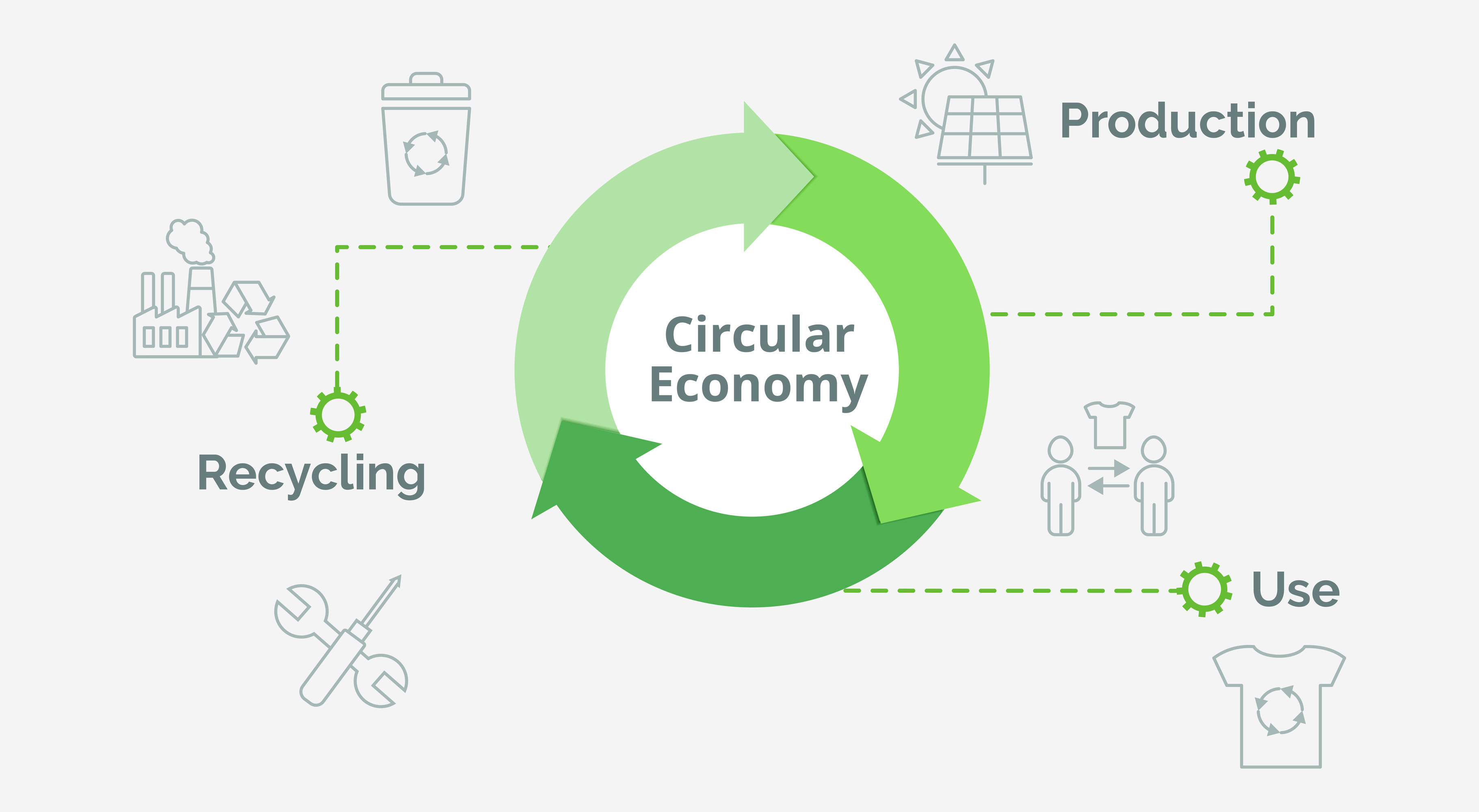
This comes after the Labour party made a commitment to transition to a circular economy in its manifesto, published earlier this month.
According to the Green Alliance, the new government needs to allow for “cross-governmental collaboration”, as it believes resource management should not be treated solely as a waste issue but as an integrated effort across all departments.
Secondly, the body called for a “reboot” of the UK’s resource plan. This involves improving data by establishing a National Materials Datahub, addressing financial incentives that favour a linear economy by fixing VAT biases, enhancing product standards to promote the production of durable and repairable goods, and expanding producer responsibility schemes to cover new sectors.
Targets
Thirdly, Green Alliance recommended setting “ambitious” targets to keep resource use within planetary boundaries, which would serve as a guiding principle for economic actions.
Both Labour and the Conservatives prioritise economic growth. Researchers suggested that more “effective” resource use in manufacturing could boost GDP by 3% by 2050.
The UK Climate Change Committee estimated the cost of transitioning to net zero by 2050 at around 1% of GDP. A strong approach to repair, remanufacturing, reuse and recycling could also create over 450,000 jobs by 2035.
Furthermore, according to Green Alliance, reducing “throwaway culture” can mitigate economic risks. The Green Finance Institute warned that environmental damage is already hindering growth and could result in a 12% fall in GDP, exceeding the economic impact of the Covid-19 pandemic.
With only half of the emissions reductions needed by 2032 covered by confirmed policies, Green Alliance has said that the new government must address this gap to meet legally binding climate targets.
Netherlands
The Green Alliance has also urged the UK to follow the Netherlands’ example, where it has said transitioning to a circular economy is “a priority”. In contrast, the Green Alliance has stated that England has faced delays in resource policy, with its material footprint growing markedly in 2021 to an estimated 16.5 tonnes per person per year—more than double the UN’s sustainable level.

Register for free to comment