

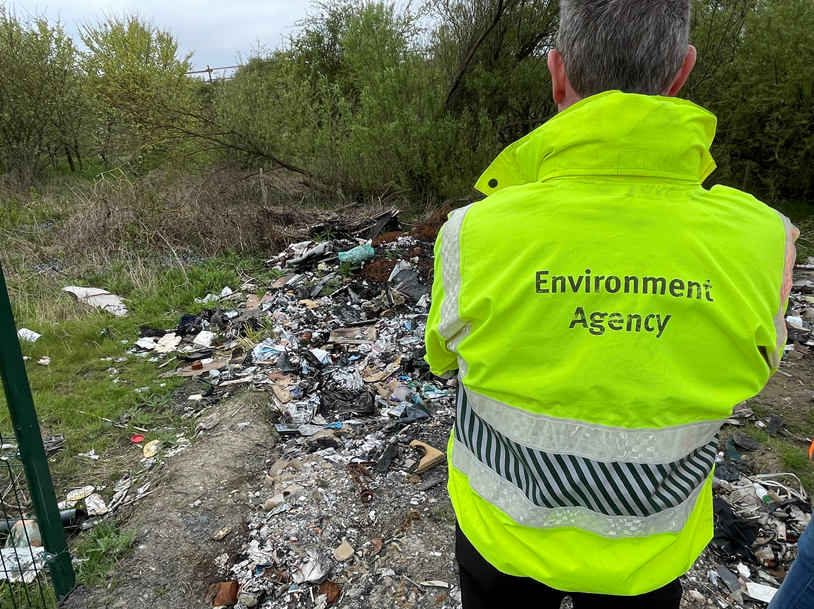
It follows news that it is in the process of granting “police-style” enforcement powers to the Environment Agency (EA) – making it one of a small number of organisations with this capability.
Defra has said that the powers will allow the EA to “intervene earlier and bring more criminals to justice”.
Environment Secretary Emma Reynolds said: “Waste crime is a disgrace. It blights our countryside and communities, damaging our environment and economy.
“That is why we are taking decisive action. We’re giving the Environment Agency the police-like powers they need to stop waste criminals in their tracks and bring those responsible swiftly to justice.”
The government will expand the EA’s powers under the Police and Criminal Evidence Act (PACE) and the Proceeds of Crime Act 2002 (POCA).
It confirmed that “any laws would be introduced when parliamentary time allows”.
While the extent of the powers has not been confirmed, Defra said that they will allow the EA to:
- Make earlier interventions
- Increase the number of “criminals brought to justice”
- Target gang-related waste crime through financial means
Chief Executive of the Environment Agency Philip Duffy said: “Waste crime causes misery across communities, and we have significantly stepped up our response to it already. But we are not standing still.
“While having more boots on the ground is important in tackling these criminal networks, we also need to make sure our officers have as many powers as possible to bring them down.
“But we can’t do this on our own. We are working closely with the police and local government. And we need the eyes and ears of the public to report potential dumping through Crimestoppers or our incident hotline. Working together, we can drive criminals out of our waste sector.”
Waste Crime Action Plan
The government’s Waste Crime Action Plan will set out a “tougher approach” to waste crime.
This will range from enforcement action targeting fly-tipping to tackling large illegal waste sites.
While most details of the plan are not yet known, the government said that it is looking at ways to award penalty points on driving licences for those found guilty of fly-tipping.
Driving licence holders can be disqualified from driving if they build up 12 or more penalty points within a period of three years.
The government added that it is also exploring ways in which enforcement bodies can share information with banks and finance companies to inform them of waste criminality.

The EA has been unfit for purpose for many years! They don’t use the powers they already have, so giving them more will make no difference whatsoever!