


First introduced in January 2017, Gloucester’s kerbside collection was operated by Amey, which sold recyclable materials on the council’s behalf to Wilcox Textiles.
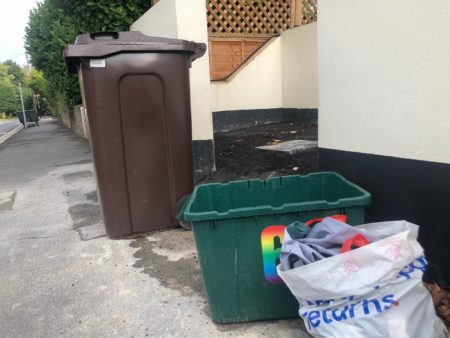
However, the textile recycler stopped buying kerbside material last summer due to quality concerns, and the council said it moved to a month by month contract with a separate textile operator, which then opted out.
A spokesperson for the council said: “This last year has been exceptionally challenging in the textiles market, with cheap textiles from China having flooded the markets and driving up the standard which companies were willing to accept.
“In the summer of 2019 JMP Wilcox withdrew their contracts for any kerbside collected textiles; they were the biggest processor in the textile industry, and this had a knock-on effect.
“Gloucester were not using Wilcox at that time, but we had a month-by-month contract with another company, and in September they too decided they were no longer going to accept textiles collected in kerbside collections.”
The changes came into effect last month.
The council plans to replace textile collection with a small WEEE kerbside service and says it has applied for grant funding.
Market
JMP Wilcox, which describes itself as the largest textile recycler in the UK, decided in the summer to step back from buying kerbside collected material due to high levels of contamination.
Concerns have been raised across the market among textile recyclers that much of the material collected is of such low quality that it is not possible for it to be recycled or worn again.

Clothes left by the side of the road can get wet, are often mixed with other side bag waste and sometimes can be splashed with dirty water when carried on a cage in a collection vehicle.
The Gloucester city council spokesperson said: “The reasons are that they are generally of a poor quality because they are put out in rain and collected on multipurpose vehicles, often stored in open yards and collected only when there is enough for a full load.
“It is far more sustainable for residents to take good quality clothing to charity shops, return them to high street stores for money off vouchers or use clothing banks for lower quality clothing that cannot be reused.”
Europe
As part of the European Union’s Circular Economy Package all member states will be required to introduce separate kerbside collections for textiles by 2025.
With Britain set to leave the European Union at the end of this month, it is unclear whether the policy will have any future bearing on the country.
At the Bureau of International Recycling’s world conference in Budapest in October 2019, many textile recyclers said that the legislation has led to quality of material decreasing (see letsrecycle.com story).
The Circular Economy Package says that separate collection obligations should be strengthened and extended to hazardous household waste (by end 2022), bio-waste (by end 2023), textiles (by end 2025).

Register for free to comment