


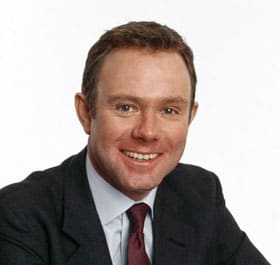
Conservatives pledge long-term Landfill Tax certainty
Mr Herbert, who took over from Peter Ainsworth in January, told delegates at Futuresource last Wednesday (June 10) that Landfill Tax should remain at least £72 per tonne until 2020, going beyond the three year commitment to escalate the tax made by the current government in April's Budget (see letsrecycle.com story). Mr Herbert said that the current lack of clarity beyond 2013 prevented innovative alternatives to landfill being found and that it was important to make landfill “less attractive”. Mr Herbert's comments confirmed the Conservative commitment to a “long-term stable framework” first mooted by Shadow Chancellor George Osborne in July 2008.
“For too long we have simply buried waste in the ground and forgotten about it,” said Mr Herbert. “But landfill is the most environmentally damaging way to dispose of rotting rubbish.”
EA calls government to lead by example
The Environment Agency has called on the government to follow in its footsteps and help lead by example in cutting waste and improving recycling.
Lord Chris Smith, chairman of the EA, told Futuresource that the public sector had the ability to promote an environmental message and pointed to efforts undertaken by the Agency, such as recycling food waste and plans to build up to 80 wind turbines on EA-owned land. Lord Smith emphasised that reducing the public sector's environmental footprint was not simply about making sure procurement was environmentally sound but about improving all aspects of internal environmental management, including responsible management of the waste produced. And, Lord Smith also said that the entire public sector must share its ambition to improve performance and he claimed that currently the government was struggling to do so.
He said: “The public sector is failing in major ways to live up to its responsibility but I would like to think that the EA itself is doing better than all that.”
May Gurney screens source-separation film

The company, which took over source-separation specialist and community recycling firm ECT Recycling in 2008, screened the film for the first time at Futuresource in London last Wednesday (June 10). The film features testimonials from May Gurney's recycling customers, including David Mansell from the Somerset Waste Partnership and includes an interview with Stephen Sears, director of policy and strategy in the environmental services division of May Gurney and former chief executive of the ECT Group. May Gurney currently provides environmental services for 16 local authorities, covering 1.3 million households across the UK, and claimed that separating recyclables such as glass at source – rather than mixing them together – was cheaper and better for the environment.
Nicola Peake, managing director of Environmental Services, said: “We were very excited to be screening the film at Futuresource. Source separation is a hot topic in the waste management industry and we have strong views that it's where recycling should be heading in the future.”
To view the film click here.
Pace of change in UK “phenomenal”
The pace of change with regards to recycling and minimising waste in the UK has been “phenomenal” and could soon see the UK becoming one of the best-performing countries in Europe, according to the chief executive of the country's largest waste management firm, Veolia Environmental Services.
Speaking at a Futuresource debate on European comparisons last Tuesday (June 9), Jean-Dominique Mallet said that the UK had traditionally been behind other European countries in recycling and recovering energy from waste and suggested that the country's quest for a “magic wand” technology and slow planning process had somewhat held it back. However, he pointed out that Europe was not a level playing field with regards to culture and legislation and said that the pace of change was “phenomenal” in the UK and that he expected the country to be on the top of its game within just a few years.
He said: “The UK is absolutely heading in the right direction. It is true that the UK is behind but with the will of all the stakeholders over the past few years I am very confident that the UK will be on top of the scale in the next 3-5 years.”
Pay-as-you-go “crucial” to Flanders recycling success
Flanders may not have been able to achieve its high recycling rates without pay-as-you-throw, according to the Flemish Public Waste Agency.
Speaking at a conference on European comparisons, John Wante, policy officer at Flemish agency OVAM, said that recycling rates rose in the region to about 70% in 2002 and that this was in part thanks to the introduction of a polluter pays policy from the mid 1990s onwards, whereby households were charged according to how much residual waste they threw away. Mr Wante also said that producer responsibility measures, whereby an extra charge to cover recycling costs was added to new goods, and the diversity of recycling services on offer in Flanders had contributed to its success.
Responding to a question from John Summers, chief executive of Keep Scotland Beautiful, on whether such a high recycling rate would be possible without such a scheme, Mr Wante said: “I don't think it would have been possible to achieve these results in five years, when we went from less than 20% to 50% without it, so it has been a crucial pillar of our policy.”
Per-Anders-Hjort, vice president of Waste Europe for Suez Environnement, agreed, adding: “I think it has to be a key cornerstone in policy that we pay for services.”
“A lot of work to be done” on revised WFD

Speaking on the first day (June 9) of the Futuresource event in London, Ms Jackson said: “I am very sorry about the Waste Framework Directive; it's a very confusing text, the reason is it was negotiated late at night between me the Slovenian president in charge of the council of ministers, we couldn't bear the sight of each other”.
Acknowledging that “there's no doubt that there is a lot of work to be done in filling in the detail of the WFD”, she explained that it would now head to a process of 'regulatory committee with scrutiny', which would mean the decisions would take place “off stage”.
Looking to the future, Ms Jackson said that she envisaged a move away from large directives passing through the European system, explaining that “I think the Waste Framework Directive is almost the last that will be negotiated behind the scenes with really little trouble”.
Commenting in the potential for a Biowaste Directive, she claimed that “the commission has one in its bottom draw but they appear to have lost the key”, and, referring to a potential review of the current Landfill Directive, she said: “I think that's unlikely before the final date comes up”.


Register for free to comment