

Levels of Legionella contamination in UK-produced compost were found to be higher than previously seen in Europe by a University of Strathclyde study, but organics recyclers have emphasised that no trace of the bacteria was discovered in PAS 100 compost.
The study results follow four cases of Legionella longbeachae in Lothian, Scotland, which were linked to compost last month (see letsrecycle.com story), while two cases of the bacteria have since been linked to compost in Tayside.

The authors of the study have called for a larger-scale survey of compost products and suggested that general hygiene warnings could be added to compost packaging in order to help protect public health.
However, the study only tested one PAS 100-approved compost, in which no traces of Legionella bacteria were detected.
As a result, the Organics Recycling Group (ORG) said the study used too small a sample to give enough information about the likelihood of Legionella in PAS100 composts, but reiterated its guidance that the phase of high temperature treatment within the PAS 100 process should be enough to kill the Legionella bacteria.
The ORG also said there was no indication of whether the growing media which did test positive for Legionella contained green waste or not.
ORG and Renewable Energy Association (REA) technical director, Jeremy Jacobs, commented: Its important to follow a few simple health and safety guidelines when using a growing medium, such as wearing gloves, avoiding inhalation of any dust and washing your hands thoroughly after handling.
‘Its important to follow a few simple health and safety guidelines when using a growing medium, such as wearing gloves, avoiding inhalation of any dust and washing your hands thoroughly after handling.’
Jeremy Jacobs, Organics Recycling Group
He added: Its important to note that this is not a problem with compost per se, as the bacteria is actually contained in the moisture within the growing medium, which often contains peat as well as compost. Cases like these are very rare when you consider the huge volumes of compost which are used across the UK. Composting is safe, green and a great use of what would otherwise be waste.
Legionella study
Published in the journal Clinical Microbiology and Infection last month (September 3), the study claims to be the first comprehensive analysis of composts commonly available in the UK for the presence of Legionella species.
The research team found that 14 of the 24 different brands of compost it tested between February and June 2012 for the presence of the bacteria contained a variety of Legionella species.
Led by Dr Tara K. Beattie of the Universitys Department of Civil Environmental Engineering, the researchers tested 22 store-bought composts, one PAS100 green waste compost and one homemade compost. 22 of the samples were then re-tested after an enrichment period of eight weeks.
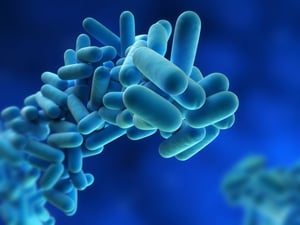
According to the study, longbeachae bacteria was found to be one of the most commonly isolated species of Legionella, while two isolated species of pneumophila were also identified. Longbeachae, which was found in four brands of compost, is known to have caused human disease.
Dr Beattie said: Within the UK and across Europe composts have traditionally been composed of peat, whereas sawdust and bark are more often used to produce compost in Australia and New Zealand where Legionellosis associated with compost is more common.
It may be that the change in composition of composts in the UK, moving away from peat based products, could be resulting in species such as Legionella longbeachae being present in compost and therefore more cases of infection could occur.
Dr Beattie added that a larger-scale survey of a range of compost products was now needed in order to determine whether these bacteria are as widespread in composts as the study suggests.
Lothian
One of the four patients diagnosed with Legionella longbeachae last month is still in hospital, according to NHS Lothian, but is no longer in intensive care – while the other three had all been discharged from hospital.
Dr. Martin Donaghy, medical director at Health Protection Scotland (HPS), said tests were on-going into what caused the outbreaks.
He said: Despite intensive efforts, investigations to date have not identified a common retail source or manufacturer of horticultural growing media or supplier of composted waste associated with this outbreak. We have concluded that it is highly unlikely that there has been a common source linked to the cluster of cases appearing in a relatively short time in Lothian and Tayside.

Register for free to comment