


Council commercialisation, municipal entrepreneurship, public sectorprofiteering, whatever title it goes by, in the face of ongoing reductions in the grant funding provided by central government, Councils are looking more and more how they can develop income streams to generate a return on their investment from the services they provide. This article looks at the regulatory framework which is being used to commercialise their services.
Councils generating income from their activities is by no means a new idea; it has been operating successfully for a number of years, according to Richard Carr in his paper ‘The rise of entrepreneurialism in local government’. He identifies that the sector’s combined profits of externally traded services of £1.5bn between 2008 and 2013 exceeded that of companies like JD Wetherspoons (£353m), John Lewis (£885m) and Waitrose (£1.25bn) over the same period[1].
Regulatory Framework
The Local Authority (Goods and Services) Act 1970 gave Councils the power to trade in goods and services with other public bodies. The Local Government Act 2000 gave Councils a general power to provide services or activities required for the wellbeing of the local community, and the Local Government Act 2003, in Section 95, provided Councils with the ability to trade in function related activities with a view to profit; however, to exercise this power a local authority must establish a company to do it. In Section 93, it also gave authorities the power to charge for discretionary services. Discretionary services are those services that an authority has the power, but is not obliged, to provide.
Waste Management
From a Waste perspective, opportunities for commercialisation are constrained by the revision of the Controlled Waste Regulations (2012). Schedule 2 of the Regulations specify which types of waste can be charged for, defined either by the nature of the waste or the type of property where it is generated. The Regulations also specify whether charges can be levied for the collection of the waste, its subsequent disposal, or both.
Trade waste collections, however, provides Councils with the ability to obtain an income from a service. The EPA 1990 requires authorities to arrange for the collection of commercial waste in their area if requested (s45 (1)(b), and a reasonable charge may be made for its collection and subsequent disposal. (s.4594))” i.e. should a request be made by a business to collect commercial waste, the statutory waste collection authority must make the necessary arrangements and the charge it levies should cover all related costs. This is therefore an opportunity for an authority who have two specific potential sources of competitive advantage in not having to charge VAT for this service and having the ability to collect trade waste using an existing domestic fleet.
There are a range of other opportunities that exist in other waste management services, with the most popular including charging for bulky waste and garden waste collections.
There are various options for charging for Bulky Waste:
– Charging per collection e.g. fixed price for up to 6 items
– Charging per item
– Certain number of items free / nominal amount and charge (more) over that
According to Newham Council, the average local authority cost in London for a bulky waste collection is £43. Newham[2] charges £20 for a collection of up to six bulky waste items. All of the income goes into providing bulky waste collections and they do not make any profit from the charge, as required by the 2003 Act.
Another popular charge is for garden waste collections which between 2011 and 2016 saw the number of councils levying a charge double. According to research 42% of Councils now charge[3] with the average cost for a chargeable kerbside garden waste collection being £41.20.
DIY waste
One area that has recently become contentious is where councils have introduced or sought to introduce charges to residents for the use of Household Waste Recycling Centres to dispose of DIY waste from home renovations (plasterboard, carpets, or kitchen or bathroom fittings). These charges have been introduced due to the difficulty in interpreting Section 51 of the EPA (1990), which sets out the duty for Waste Disposal Authorities to provide a facility for residents in their area to dispose of household waste free of charge. Confusingly, whilst construction and demolition waste from households is not defined as household waste for the purposes of the EPA, DIY waste is classed as household waste if it results from work a householder would normally carry out.
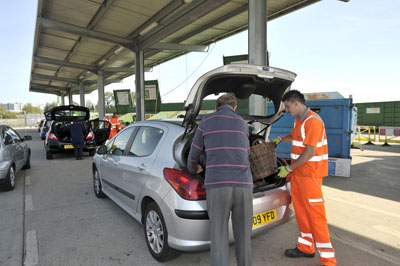
Government has promised to work with WRAP to review current guidance to ‘ensure this reflects changes in the law and to make clear what can and cannot be charged for at HWRCs – including in respect of DIY waste’[4].This revised direction, will also explore ways of managing HWRC services to facilitate access for local householders and small businesses ‘at proportionate cost’ and is set to be published by the end of 2017. In the meantime, councils continue to introduce charges with West Berkshire recently announcing it will introduce charges for disposing of some ‘non-household’ materials at its HWRCs in September.
Trading Vehicles
Legislation such as the Localism Act 2011, also provides opportunities for Councils to generate revenue, as it contains the ‘general power of competence’ that allows local authorities to do anything that is not expressly prohibited, offering scope for Councils to encourage innovation in the delivery of its services and, combined with the powers in Section 95 of the Local Government Act (2003) enables them to set up potential trading vehicles to carry out a service for the well-being of the community. These new models provide Councils with the potential to undertake commercial ventures whilst at the same time offering a level of protection to customers which can prove very successful and meet a number of important aims, but importantly they require clear planning, a strategic approach and buy-in from all stakeholders
Examples of such models include:
- Company Limited by Shares
- Private Company Limited by Guarantee Community Interest Company (CIC)
- Industrial & Provident Society (IPS) for Community Benefit (BenCom)
- Limited Liability Partnership
There are a number of Councils presently benefiting from operational and financial benefits by operating such models.
One example is Streetwise, which is Rushcliffe Borough Council’s grounds maintenance and cleansing service. Based in Nottingham, they undertake work across the East Midlands. Since autumn of 2014, when Streetwise became a social enterprise, they have been providing playground inspections, and cleaning and maintaining the borough for the Council and businesses, including schools, parishes, sports clubs or voluntary organisations.
The Business Case
Whatever business model is used, councils launching services either to cover the costs of a discretionary service or to generate a profit using funding from taxpayers introduces a level of risk that can attract public disapproval very quickly should things fail. As a result, commercialisation of a service will undoubtedly put an authority’s processes, members and staff under increased scrutiny and operating in a different world to that which they are used to. There is no guarantee that everyone will be comfortable or that everything will just fall into place and be successful. It is imperative therefore that Councils develop a comprehensive business case for all such ventures, as well as ensuring that processes are developed to support trading and that elected Members and staff have the knowledge, skills and tools to deliver the commercialised services.
The business case should show how a local authority understands the local market and include a well thought out sales and marketing strategy. Councils need to ensure the commercial framework of the business, such as contract arrangements and pricing structures, are robust and fit for purpose. There is likely to be stiff competition from the private sector and customer recruitment and retention is a key element of the success of any commercial service whether private or public. Employees will need to undergo comprehensive training programmes in an attempt to provide the commercialisation expertise and understanding needed to provide a competitive offer to the market place.
Commercialisation, however, is not just about selling services and materials; it can also take other forms such as sharing services with other local authorities, establishing concessions, developing better contract management procedures and improving procurement processes.
There is no doubt that the present regulatory framework enables to Councils to commercialise their services. This enables them to realise income generation which will help to offset continued budget cuts and protect front line services and has the potential to enhance social value through increasing employment opportunities and ensuring the wider use of assets.

AUTHORS
Brian Mayne is Ricardo Energy & Environment’s Regional Director (Wales) for waste management and resource efficiency.
He is a fellow of the Chartered Institution of Wastes Management and Chartered Environmentalist. Brian is responsible for project direction and management, business development and technical delivery across a range of resource efficiency areas for Ricardo Energy and Environment. He has a background in strategy policy and operational management at a senior level within local government.

SarahJane Widdowson is a principal waste management consultant with over fifteen years’ experience in the environmental sector. She specialises in waste and recycling technical advisory working for the public private and third sector. SarahJane joined Ricardo after working for Haringey Council as Recycling Improvement and Development Manager
References
[1] Richard Carr, LOCALIS, Commercial Councils, http://www.localis.org.uk/wp-content/uploads/2016/02/Localis-Commercial-Councils-FINAL.pdf
[2] https://www.newham.gov.uk/Pages/ServiceChild/Paying-for-a-bulky-waste-collection.aspx
[3] https://mantis.uk.com/garden-bin-tax-how-does-your-council-compare-2/
[4] https://www.gov.uk/government/uploads/system/uploads/attachment_data/file/630999/litter-strategy-for-england-2017-v2.pdf

Subscribe for free