


The 2014/15 resource capture and treatment review, produced by Hampshire’s Project Integra partnership, uses collection data from across 13 district, borough and unitary councils in the county – in a bid to determine where the capture of certain waste streams could bolster recycling rates.
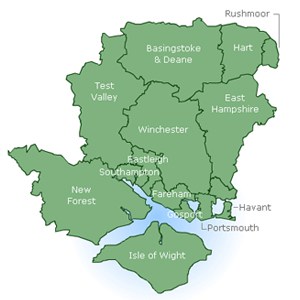
Launched in 1995, the Project Integra partnership consists of 11 district and borough councils that make up Hampshire as well as the unitary authorities of Portsmouth and Southampton, and waste contractor Veolia.
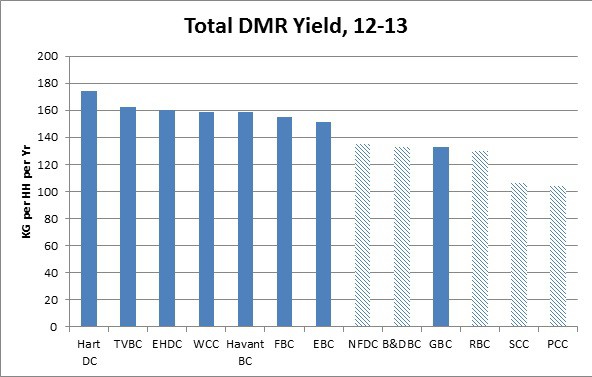
The document, produced ahead of a meeting of the organisation’s board on Thursday (February 5) shows that in 2012/13, seven of the 13 councils generated between 170kgs and 150kg of dry mixed recyclables per household each year.
Meanwhile, the five councils operating weekly refuse collections trailed behind – generating between 100-130kgs of dry mixed recyclables per household each year.
Gosport
The only bi-weekly collection authority to generate a smaller recycling tonnage was Gosport borough council, which produced around 130kg per household – below New Forest and Basingstoke and Deane district councils.
Meanwhile, the average cost of household waste collections across Hampshire compared favourably with other councils in England, with six of the 11 districts and boroughs ranking among the 75 collection authorities with the lowest cost.
The cost of waste collections per household varied between £29.13 and £55.04, with those authorities collecting refuse weekly amassing higher costs than those with fortnightly collections.
The average cost of waste disposal per household was recorded as £85.69. This accounted for £65 million of the county’s total £97 million waste management costs.
Tonnages
The report goes on to highlight the untapped waste and recycling streams where Hampshire could yield higher recycling tonnages.
It shows that while the average amount of municipal waste landfilled has decreased across the partnership from 14% in 2007/08 to 8% in 2013/14 – the amount sent for recycling, reuse and composting appears to be in decline – down to 34% from a peak of 38% in 2009/10.
In its evaluation of the different material streams that are or could be collected in Hampshire, Project Integra identified the collection of mixed plastics – such as pots, tubs and trays – as one area that could be explored further.
It is estimated 3,500-4,500 tonnes of PTT could be captured if it was added to kerbside collections, with a maximum recycling rate increase of 0.46% to 0.96% for each partner.
However, there are no materials recycling facilities (MRFs) within the Project Integra catchment area which are capable of processing mixed plastics without producing contaminated outputs. The partnership recommended the preparation of a report containing the full costings of accepting the material at MRFs in Hampshire and quantifying the risks – with a deadline of June 2015.
The body is also keen to tap into the 26,000 tonnes of uncaptured existing recyclables that are sent for energy recovery – and the 15% recyclable element of MRF residues. It asked councils to consider that recycling yields are ‘higher’ among those authorities that carry out fortnightly residual waste collections.
Action plan
The partnership has also unveiled a draft action plan for the next three years, which identifies areas for councils to focus their resources up to 2018.
The action plan is usually amended every 12 months, but the three-year schedule is part of a cost-saving exercise which if forecast to cost £374,100 over its lifetime. The partnership will however reserve the capacity to amend the plan if necessary.
In the draft, the action plan emphasized focus on improved communications between all 14 authorities. Partnership minutes reveal that Winchester, Portsmouth, Southampton, East Hampshire and Basingstoke have all withdrawn from the joint ‘Recycle For Hampshire’ communications scheme since it was launched to pursue their own activities.
‘Recycle For Hampshire’ has however helped generate £60,000 in funding for the Pledge for Plastics campaign, 10% of which was by contributed by Veolia.

Register for free to comment