

And, the scheme will also support councils which wish to introduce, retain or reinstate weekly collections of residual household waste – but only where they are supplemented by a separate recyclables collection at least once a fortnight.
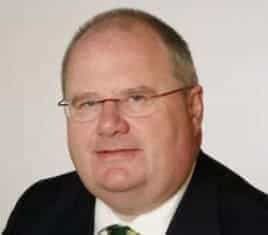
The criteria werepublished by Communities Secretary Eric Pickles as heannounced that the 250 million fund, firstunveiled in September 2011 (see letsrecycle.com story), is now open for applications.
Councils now have just a month and half until March 16 2012 to submit an expression of interest, with outline bids due by May 11 2012 and final bids by August 17 2012. Final decisions about which bids receive funding will be announced in October 2012, with the first money available in the 2012/13 financial year.
Mr Pickles said: “This scheme will literally help stop the rot. Over the last decade, we have witnessed a massive decline in the number of households getting weekly collections and an increase in people having to store food waste and nappies for up to two weeks.
“It signals that a shift in the approach and attitude towards rubbish and recycling collections can happen. This new approach puts the householders, the environment and value for money at the forefront of how councils should think about a weekly waste collection”.
Aims
According to DCLG, the aim of the scheme is to support local authorities to:
- Introduce, retain or reinstate a weekly collection of residual household waste. In addition, these collections must be supplemented by a separate recyclables collection at least once a fortnight; or
- Propose improvements to an existing waste service which is already centred around a weekly residual collection, for example by improving environmental performance, increasing the affordability or sustainability of that service; or
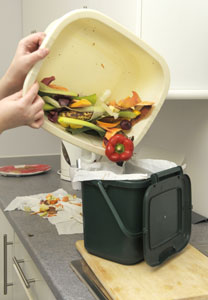
- Add a weekly food waste (or organic waste) service to an existing fortnightly collection of residual household waste, where an authority can credibly demonstrate that this represents the preference of local people. This additional service will reduce the amount of biodegradable waste sent to landfill, and reduce the amount of biodegradable food waste that has to be stored in or around the home.
The department added that it was particularly keen to promote new technologies such as mechanical biological treatment and anaerobic digestion, the use of recycling ‘reward’ schemes such as RecycleBank in Windsor and Maidenhead and Nectar points in Birmingham and to promote better procurement and joint working.
The scheme will only award funding to local authorities who commit to weekly collections for a minimum of five years from 2012/13.
Three year fund
The 250 million pot will be made available to local authorities over three years; 50 million in 2012/13, 100 million in 2013/14 and 100 million in 2014/15. Local authorities which are successful will be offered a grant payment they can use for either revenue or capital expenditure. The scheme is additional funding to local government, financed from savings made to the Department for Communities and Local Government’s central budget.
There is no limit to how much funding an authority can bid for, but due to the finite nature of the fund, DCLG said there would be limited scope for large-scale bids for 5 million or more.
Any local authority in England can lead a bid whether they are a waste collection authority or waste disposal authority. Bids will be accepted from individual local authorities, a group of local authorities or a consortium that includes businesses and third parties.
A Technical Advisory Group made up of waste and recycling experts will review expressions of interests and bids, but final decisions on awarding funding will be taken by Mr Pickles.
Mr Pickles stressed that the fund was flexible and would support a wide range of council schemes.
He said: It may be that some councils do not embrace this opportunity to offer weekly collections to their residents, but at the heart of localism is choice, meaning that councils have the opportunity and means to take a decision to improve their service, and be held to account at the ballot box.
Complex
This scheme will encourage councils to provide the services we believe residents really want, without sacrificing the environment
Caroline Spelman
Ministers believe that waste services have become too complex, leaving residents anxious about following the rules and possible penalties. They think councils should focus on three things: better weekly collections, better contracts and better use of innovative ideas or technology that help residents to recycle more and do their bit for the environment.
DCLG said it wouldseek to prioritise bids which support comprehensive weekly rubbish and recycling collections. The fund also explicitly intends to tackle ‘bin blight’ and the proliferation of bins, by supporting new technology where possible.
Mr Pickles said: “Rubbish collections are the most visible service that people get for their 120 a month council tax bill. But barmy bin rules have made putting out your rubbish more complicated than solving a Rubik’s cube. The public are fed up of all the bin do’s and bin don’ts.
“People just want a comprehensive service in return for their council tax, which is why this Government is working with councils to increase the frequency and quality of rubbish and recycling collections.”
Caroline Spelman, Secretary of State for Environment, Food and Rural Affairs, said: “We want to help people to go green by making it easier for them to do the right thing. This scheme will encourage councils to provide the services we believe residents really want, without sacrificing the environment.”


Register for free to comment