
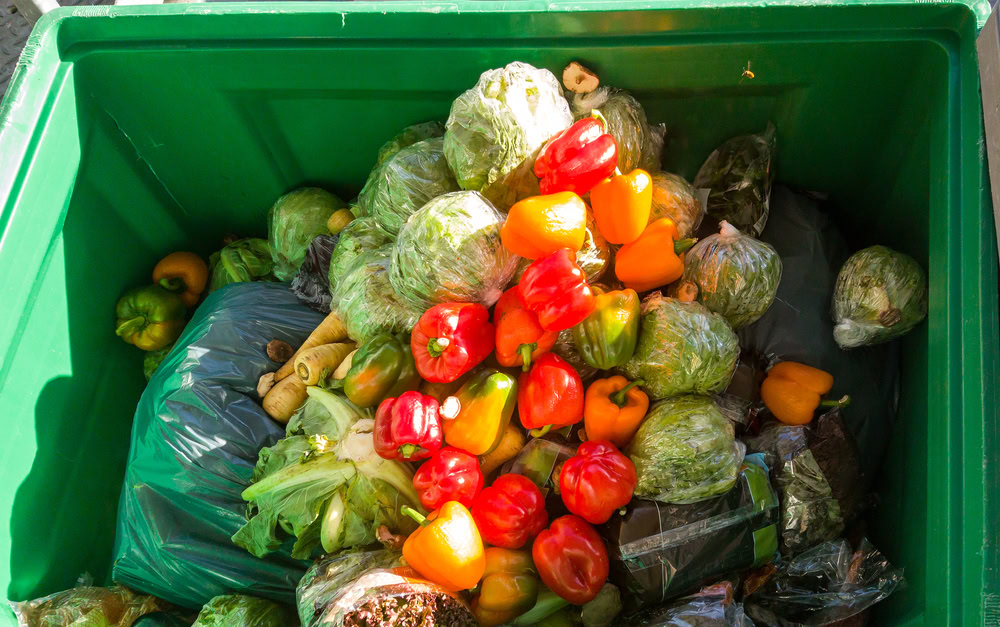
The Food For Thought study shows that in addition to food waste’s well-documented role in driving climate change, it is also a major contributor to biodiversity loss, water consumption, land use pressures and air pollution.
According to ZWS, food waste is the leading cause of damage to biodiversity and land use change, and ranks second only to textiles in terms of its contribution to water consumption and climate change impacts.
£1.3 billion of food thrown away
The scale of the problem is underlined by new data which shows that households in Scotland throw away an estimated £1.3 billion worth of food each year.
Evening meals alone account for 40% of all household food waste, while the report highlights that food waste has the single greatest impact of all waste streams on biodiversity loss and land use.
Iain Gulland, Chief Executive at Zero Waste Scotland, said: “These findings really bring home the staggering impact our food system has, not just on climate change, but on the environment as a whole.
“More specifically, they reinforce how important it is that we reduce food waste from our homes, making the most of the food we love and reaping the benefits of smarter food behaviours for our budgets and lifestyles as well as for the planet.
“But responsibility can’t just fall to consumers; we need everyone – from decision-makers to welfare organisations to businesses and brands – to raise the profile of food waste as an issue and work together to tackle it.”
Household Intervention Plan for Food Waste Reduction
Food waste has been identified by the Scottish Government as a priority action in its Circular Economy and Waste Route Map to 2030.
ZWS confirmed it will lead the development of a new Household Intervention Plan for Food Waste Reduction on behalf of the Scottish Government.
The plan will focus on behaviour change at household level, with input from key partners and stakeholders. It will set out practical interventions designed to reduce food waste in everyday life.
Climate Action Secretary, Gillian Martin, commented: “This research highlights the wide-ranging environmental impact that waste from Scottish households has on the world around us, including on our climate, air quality and biodiversity.
“The findings highlight where Scotland has made good progress to reduce these impacts, and where we must focus our efforts to drive further progress, such as tackling food waste.
“We are clear that more needs to be done to support businesses and households to take action to reduce food waste and we will continue to work closely with stakeholders to identify what more can be done to drive meaningful change on this issue.”
The environmental organisation also recently released research on the wider impact of circular sectors on the Scottish economy, which generated £7.11 billion in gross value added (GVA) in 2021.

Register for free to comment