

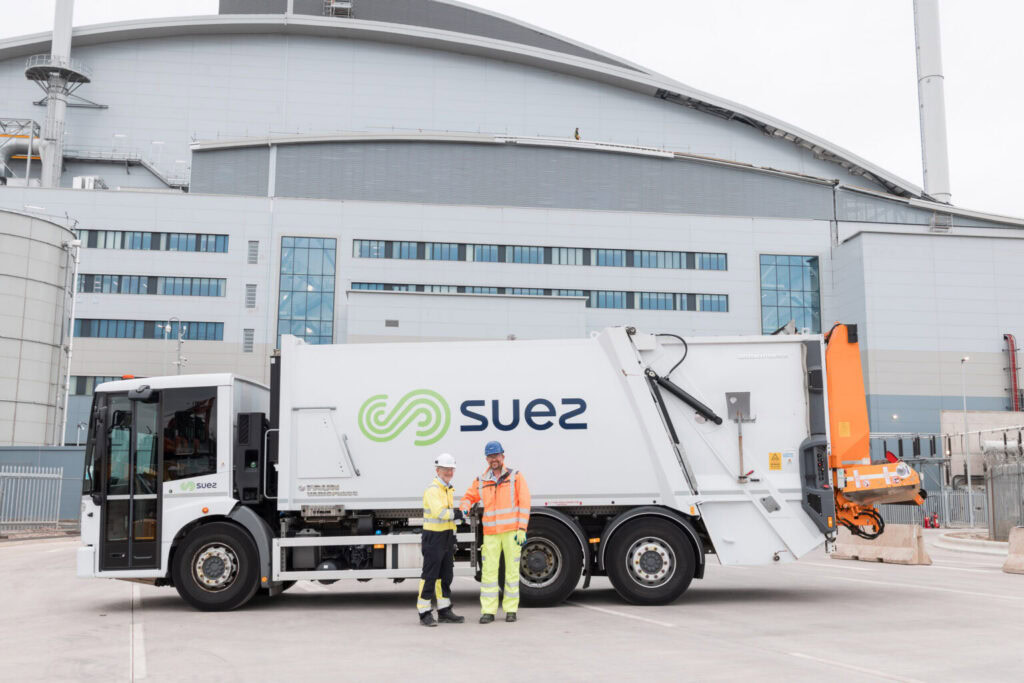
The £500 million facility this week accepted 100 tonnes of unrecyclable residual waste from Suez Recycling and Recovery UK.
Once fully operational, Kelvin will process up to 395,000 tonnes of unrecyclable waste each year, expecting to generate up to 44MW of electricity.
Simon Forshaw, Vice President of Engineering and Construction at Enfinium, commented: “The arrival of first waste at our Kelvin facility marks a key milestone for the project as it progresses towards full operations later this year and a further example of progress across enfinium’s operations.
“Our state-of-the-art Sandwell facility will provide the most circular solution to managing the region’s unrecyclable waste, diverting it away from climate-damaging landfill and turning it into homegrown energy.”
Michael Garfield, Regional Commercial Manager at Suez, added: “We’re delighted to see Enfinium’s Kelvin energy-from-waste facility take its first waste.
“The facility enhances Suez’s existing portfolio of owned and contracted residual offtakes and this multi-facility approach allows us to offer our customers in the Midlands a reliable, competitively priced disposal service for their waste left after recycling.”
Previously, further deals where struck with Biffa and B&M Waste as suppliers for the facility.
Kelvin Energy from Waste facility
Located in Sandwell, the Kelvin facility represents an investment of more than £500 million and has created over 1,600 jobs during construction.
Once operational, the plant will employ 33 people in permanent full-time roles, with almost half of those positions filled by local residents.
The facility has also been identified as a future heat source for the proposed West Bromwich Heat Network, which secured almost £5 million from the government’s Green Heat Network Fund in May 2025.
The network is intended to use surplus heat from the EfW plant to provide low carbon heating to residential and public buildings across West Bromwich.
Earlier this year, the government’s Warm Homes Plan highlighted surplus heat as a “critical part” of England’s future energy security, reinforcing the role that energy-from-waste facilities could play in supporting both electricity generation and district heating schemes.

Register for free to comment