

Mr Fell was speaking at the Metals Recycling Event and CARS Expo at Donington Park, near Derby on Wednesday (July 13), where he highlighted work that businesses in the metals sector had done to increase the collection of steel cans for recycling.
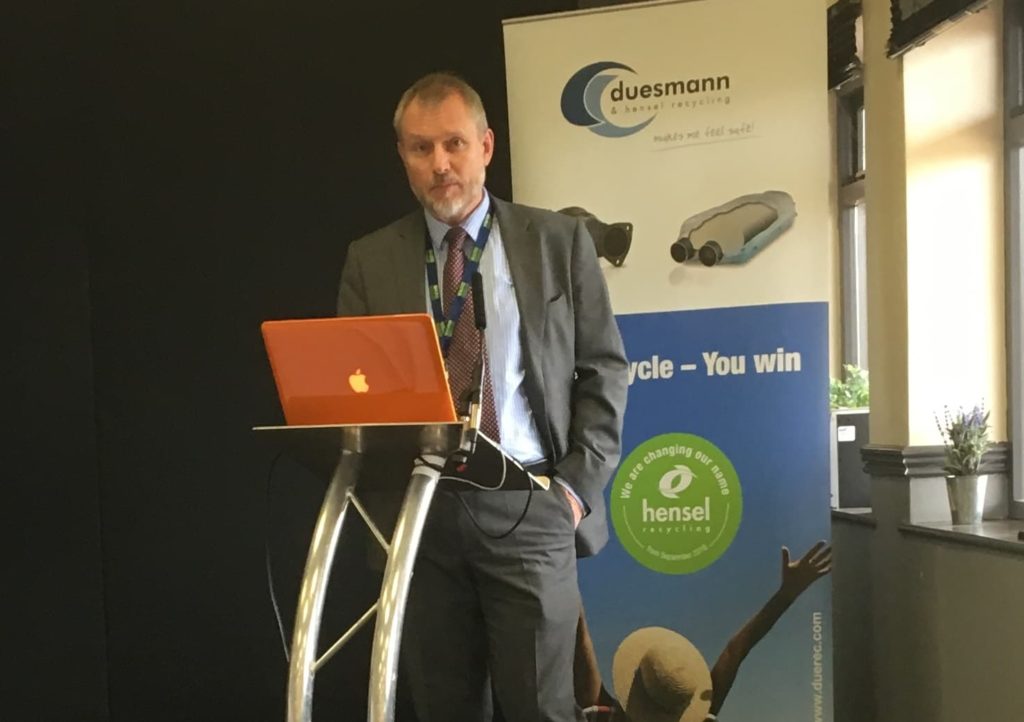
He claimed that the metals industry is playing its part in helping to deliver “a sustainable planet for future generations” and that the industry needs to be more vocal in promoting its own successes.
Mr Fell was speaking in a session titled ‘Metals Recycling: The State of the Industry’, which was chaired by Roy Hathaway, Europe policy advisor at the Environmental Services Association.
Action
Mr Fell, who took over at the helm of the BMRA from Ian Hetherington at the start of 2016, also called for the government to act to address the continued payment of cash for scrap by some operators – a practice which has been illegal in England since late 2013.
Mr Fell said: “I joined the BMRA from the metals packing industry, where we sat back doing little to promote sustainability, assuming, wrongly as it turned out, that every knew metal is one of two permanent materials and therefore fully recyclable. Then the phone started ringing with journalists, asking what we the metal packing industry, was doing about sustainability compared to other industries like paper.
“I think the metals recycling industry should learn from this experience and to start shouting a lot more just what an amazing job we are doing.”
On cashless payments, he said: “We as an industry are operating in an uneven playing field. The Scrap Metal Dealers Act 2013 has not prevented cash, which is illegally being handed over on some sites, which is harming traders.”
Brexit
And, addressing the subject of the UK’s continued membership of the European Union, Mr Fell claimed that ‘new opportunities’ may present themselves to metal recyclers as a result of the decision to leave the EU. Mr Fell said he wants the UK government to seize a new relationship with Europe, to make it easier for UK operators to export materials overseas.
And he suggested that the UK government could seize opportunities, such as changing the EU classification of scrap from waste to metals, that will make it easier for UK operators to export scrap metal overseas.
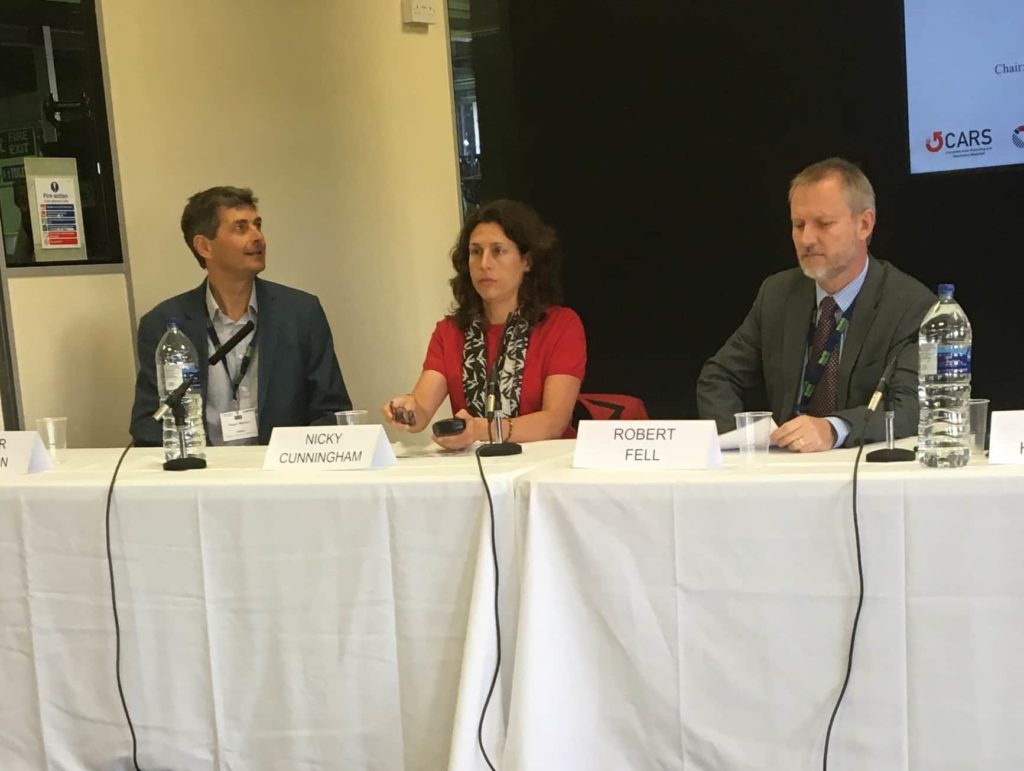
Nicky Cunningham, deputy director of site-based regulation at the Environment Agency and Roger Morton, director of Axion Recycling also spoke at the session.
Ms Cunningham sought to reassure industry representatives that the Environment Agency’s budget has been protected by the Treasury. She also called on operators to report any suspicion of non-compliance with environmental enforcement officers.
She said: “As a regulator we want to see well run sites that do not impact on the people and the environment. We also want the industry to report violations to us as soon as possible.
“One of my main concerns is the vulnerability the waste sector has to market fluctuations, and we as a regulator must work with the industry to find an innovative solution.”
Growth
Also taking the podium, Axion director Mr Morton, who oversees the running of two advanced end of life vehicle (ELV) sites at Salford and Trafford Park argued that one of the biggest challenges facing the sector is the growth in electric car sales. Data from the Driver and Vehicle Licensing Agency shows there are 45,326 plug-in cars on Britain’s roads.
Mr Morton said: “The biggest change we have seen in the industry is the increase of electric cars being sold. They now make up 10% of car sales. These vehicles are basically huge chunks of WEEE driving around.
“In the future we will need new separation and identification and separation techniques to extract the batteries and modular components, which is something we are currently doing.”

Register for free to comment