

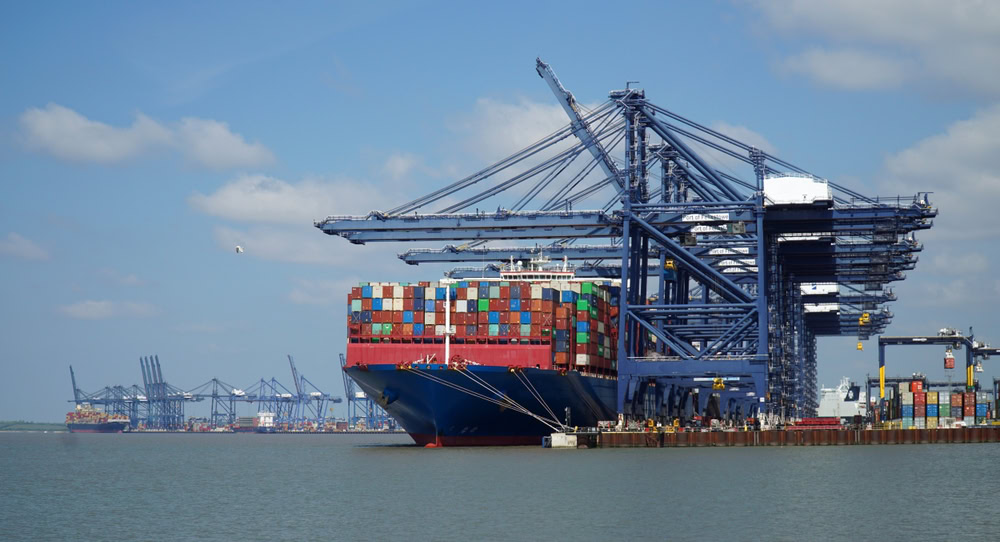
For our inaugural edition, we are questioning whether export is a legitimate solution for the UK’s waste – or whether it is just making it “someone else’s problem”.
ANALYSIS: The UK’s recycling system has long been tied to global markets. From paper and plastics to metals and textiles, multiple material streams rely on export routes. In many cases, this is not by design, but by necessity.
While the UK has made investments in infrastructure, including major facilities like Shotton Mill, it still cannot process all of the material it generates.
Plastics, textiles and lower-grade paper are particularly exposed, while even traditionally “domestically-recycled” materials such as wood are increasingly subject to export considerations.
Recent geopolitical instability has brought these dependencies into sharper focus. Disruption linked to the Iran war and wider shipping constraints has exposed the fragility of international supply chains.
Coupled with weak end-markets for some materials, tariffs and competition from cheap virgin resources, questions are growing over whether the UK can – or should – continue to rely on exports at current levels.
Regulation: Tightening oversight of waste exports
Waste export regulation is becoming more stringent, with a clear shift toward transparency.
Digital Waste Tracking will come into play from October 2026, requiring permitted sites to record waste movements digitally, before expanding across the sector by April 2027.
Alongside this, the Environment Agency is introducing new reporting requirements for “Green List” waste exports. From 1 July 2026, exporters must submit Annex VII data on a monthly basis, retrospectively detailing shipments made during the previous month.
Further reform is coming through changes to the waste carrier, broker and dealer (CBD) regime.
These reforms will replace the current two-tier model with permits or exemptions, with the new “waste controller” role placing full responsibility for a waste’s final destination on those managing its movement.
What happens to exported waste?
Exported waste typically follows one of three paths:
- Legitimate reprocessing: High-quality, well-sort materials such as cardboard or clear plastics are sent to specialist facilities, usually in Europe or Asia, where they are recycled into new products.
- Energy recovery: Lower-grade material, particularly Refuse Derived Fuel (RDF), is exported to Europe and used in Energy from Waste (EfW) plants.
- Illegal disposal: In some cases, “mixed” waste is mislabelled. In regions with weaker environmental enforcement, this material may be dumped or burned illegally.
As a major importer of goods, the UK receives vast quantities of materials embedded in products.
Exporting recyclables can, in effect, send these materials back along established trade routes – often using ships that would otherwise return empty – making it both economically and environmentally efficient.
Benefits of exporting waste
Exports play a key role in keeping the system functioning.
In many cases, overseas facilities are highly advanced, with the capability to process materials more efficiently than some UK plants. This provides an outlet for materials that cannot be handled domestically, or not at a viable cost.
Access to global markets also supports competitive pricing. As a trading nation, the UK benefits from multiple outlets for its material, helping to avoid monopolies and control costs for councils and businesses.
Cost remains an important factor. High energy prices, labour costs and land constraints mean it is often cheaper to export waste than to build and operate facilities domestically. Even with new infrastructure coming online, capacity gaps persist – particularly for paper and cardboard, where surplus material still requires overseas markets.
Paul Sanderson, Chief Executive at The Recycling Association (TRA), commented: “Where there isn’t UK capacity, then the export market gives us options.
“Indeed, we’ve got to stop thinking of this as exporting waste. Instead, we’ve got to get to the point where we treat these as a commodity with a specification.
“Those markets buying this specification, whether domestically or export, will be using commodities for the circular economy.”
The risks of exporting waste
Despite these benefits, reliance on exports introduces significant vulnerabilities.
Geopolitical disruption is a growing concern. Events in 2026, including conflict in the Middle East and pressure on key shipping routes, have driven up transport costs and created uncertainty across supply chains. Exporters and domestic recyclers alike are facing higher costs and reduced stability.
Sanderson added: “How is this being felt across the sector? No business likes uncertainty and that is the same in the recycling industry.
“It also means more workload sourcing material, negotiating with suppliers, dealing with haulage companies and shipping lines, and nobody wants that.
“This is all happening when recyclers in the UK and exporters are being burdened by extra costs from regulators and extra bureaucracy from legislation and regulation.”
Unease also remain around environmental compliance overseas. While many exported materials go to high-quality facilities, failures in the system can have serious consequences, both environmentally and reputationally.
Striking the right balance
Few in the sector argue for a complete halt to exports; equally, there is broad support for strengthening domestic capacity where it makes sense.
For high-value materials such as HDPE plastics and aluminium cans, increasing UK processing capability could support jobs, resilience and a more localised circular economy.
However, for globally traded commodities like steel, paper and cardboard, restricting exports could backfire. Limiting access to international markets risks oversupply, falling prices and reduced incentives to recycle.
The emerging consensus is one of managed balance. Exports will remain essential, but with stronger safeguards.
One proposal gaining traction is a “broad equivalence” approach, supported by independent auditing of overseas facilities. Drawing on EU thinking, this could involve a centralised list of approved sites, reducing administrative burden while maintaining environmental standards.
Sanderson concluded: “We should support development of UK infrastructure, but it also has to be economically viable through the input and output costs, the costs of running the business and potentially that means subsidy such as the PRN is required.
“Some materials need that support more than others. But some such as metals and paper and cardboard are already mature, globally traded commodities, and it would be a mistake to try to cut exports of those because that is where the market should decide what is viable and what isn’t.”
Find out more about waste export policy and legislation at the Waste Exports Conference on 28 April 2026 in London.

Register for free to comment