

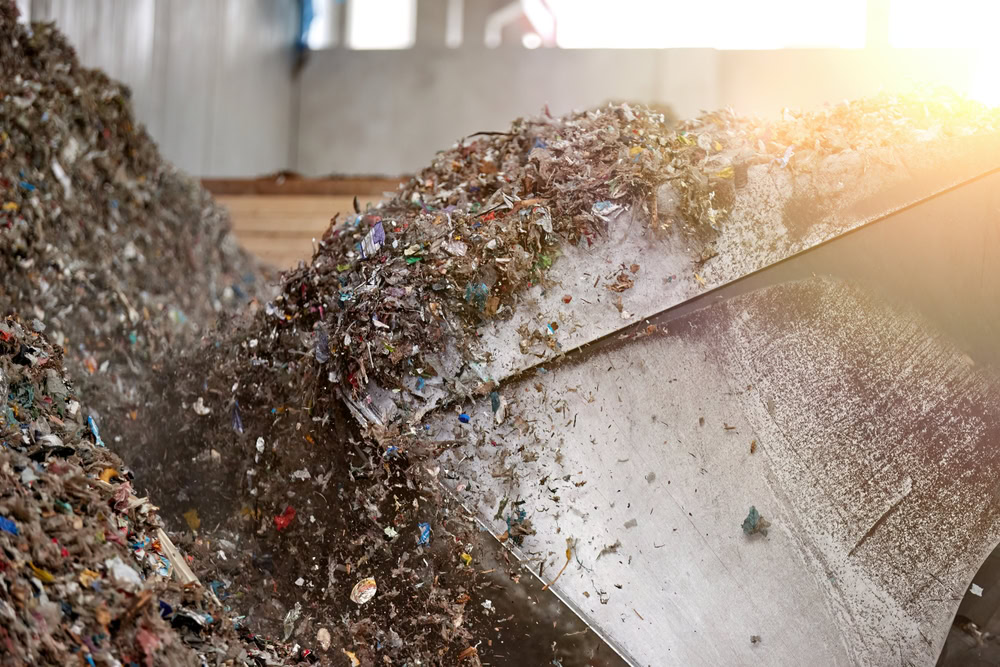
The “10 Years of the European Voice for WDF: Championing Standards, Policy and Landfill Diversion” report marked the Group’s tenth anniversary, charting the rise of the refuse-derived fuel (RDF) and WDF sector over the past decade.
According to the report, RDF exports have helped to prevent an estimated 83.7 million tonnes of carbon dioxide equivalent emissions since 2015, primarily by avoiding methane emissions from landfill and supporting Energy from Waste (EfW) recovery in plants across Europe.
RDF sector transformation
The past decade has seen significant structural changes within Europe’s residual waste management landscape.
The EU Landfill Directive has acted as a major driver of change, leading to a substantial reduction in landfill use across nearly all member states and a corresponding rise in EfW capacity.
However, investment in domestic EfW infrastructure has not been evenly matched with waste arisings in all countries.
In several member states, declining residual waste volumes have resulted in under-utilised facilities, creating a market-based solution: the cross-border trade of processed residual waste as RDF.
The UK has remained the top exporter of WDF since 2015, with Geminor said to be the largest exporter within the UK, seeing a total export volume of 364,581 tonnes in 2024.
‘Collaborative’ approach to decarbonisation
The RDF Industry Group was founded in 2015 to provide structure, guidance and representation for the growing sector.
Andy Jones, Chair of the RDF Industry Group, explained: “We saw not a collection of disparate national problems, but a single European challenge that demanded a collaborative, market-based solution.
“In doing so, we weren’t just ‘exporting waste’, but diverting it from landfill, allowing member states to collectively meet their environmental obligations in the most efficient way possible.”
Over the past decade, the Group has expanded to include more than 40 member organisations representing producers, logistics providers, testing services and EfW operators across Europe.
Now entering its second decade, the Group has set its sights on supporting the next stage of sector development.
Key priorities include advancing decarbonisation, promoting the integration of carbon capture technologies within EfW facilities and improving pre-treatment processes and fuel quality to further minimise lifecycle emissions.
Interested in finding out more about the RDF sector? Come along to the RDF Conference on 27 November 2025 in London. Find out more and buy tickets here.

Register for free to comment