


The European Commission is expected to outline proposals for revised recycling and landfill diversion targets beyond 2020 within the next two months.
And, it is understood that the Commission favours raising the statutory recycling target for Member States to in excess of 60% by the start of the next decade rising to as much as 75% by 2030.
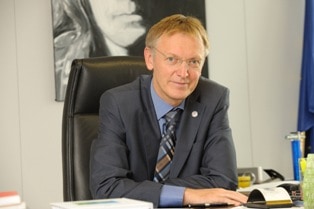
Work on revising the EUs waste legislation is being led by the outgoing Commissioner for the Environment Janez Potocnik, who is keen to lay the foundations for a more ambitious EU waste policy before a new European Commission is appointed in October 2014.
Mr Potocnik has also stated that the revised targets would form a part of a comprehensive approach to the move towards a circular economy within the EU.
Speaking at the opening of the European Forum on Eco-Innovation in Hannover yesterday (April 7), the Commissioner said: Recycling basically means that instead of burying materials in landfills when they have been used once, we pump them back into productive use. It is a circular economy system; it is resource efficient; it means we get more value added out of each tonne of materials.
‘We must not waste the potential of waste. That is why, in a few weeks I will present revised targets for recycling waste and for reducing landfill.’
Janez Potocnik
We must not waste the potential of waste. That is why, in a few weeks I will present revised targets for recycling waste and for reducing landfill. And this will be central to a more comprehensive approach to moving to a circular economy, particularly in the sectors of buildings and food.
Much of the work to achieve this will have to be done by Member States and the private sector; but the European Commission is also working to shape the framework conditions to accelerate the transition to circular economy.
Landfill
The Commission is also understood to be looking to put in place stronger landfill diversion targets for biodegradable wastes, as well as restrictions on landfilling and incineration of plastics.
Measures to improve the provision of statistics from Member States, and make reporting systems more closely aligned across the Union are also high on the Commissions agenda.
A review of the existing suite of targets as set out in key EU waste legislation – including the Waste Framework, Landfill and Packaging and Packaging Waste Directives was carried out by UK environmental consultancy Eunomia on behalf of the Commission in 2013.
Related Links
The review found that a majority of stakeholders would favour raising the recycling target beyond its existing level (see letsrecycle.com story). Currently under the Waste Framework Directive, Member States are required to recycle or reuse 50% of household waste by 2020.
Last month, Eunomia director Joe Papineschi told delegates at the letsrecycle.com Collections Conference that the direction of travel for the Commission was clear, and that a target for Member States to recycle in excess of 60% of waste seemed likely.
He said: What it looks like is going to come out of the target review is that there will be 60% plus targets, and those will also start to look at what counts towards recycling does only high quality recycling count towards that.


Register for free to comment