


Waste company Suez highlighted how EU membership had driven up environmental standards while CIWM has warned of “financial, policy, legal and performance uncertainty.”
The textiles recycling sector also expressed concerns about the potential threat to trade because of the need to draw up new trade agreements.
The organics sector questioned what drivers there will be to implement the 2020 recycling target.
Waste industry – Suez
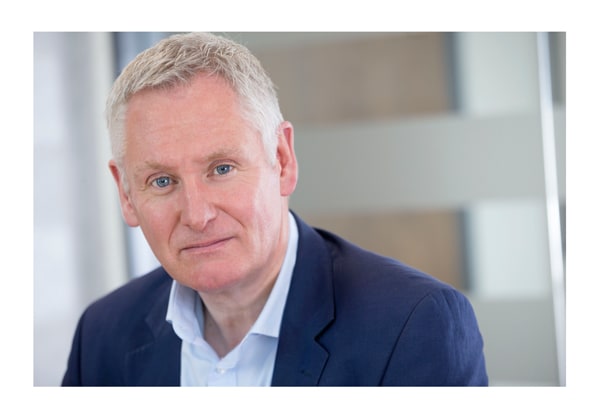
David Palmer-Jones, chief executive of French-owned Suez in the UK, who came out as a strong advocate for Remain, said: “Suez respects the democratic will of the people and our focus remains with our policy of deriving the maximum value and energy from the waste Britain’s households and businesses produce every day. While the UK renegotiates its EU membership for the years ahead there is a risk of a void at a national policy level.”
Commenting on the role of EU membership, Mr Palmer Jones said it has been a “crucial and effective” driver of environmental policy and legislation in Britain, transforming the UK from being the ‘dirty man of Europe’ to a “solid environmental performer”.
Mr Palmer-Jones added: “Our industry has a very clear vision and understanding of what needs to be done to ensure that we continue to make environmental improvements with or without EU membership. The environmental services industry stands ready to maintain its work with UK policy-makers to ensure that we have a positive future in front of us, and that we build on the environmental gains achieved over the last two decades.”
Waste industry – CIWM
In response to the outcome of the referendum, Steve Lee, chief executive officer of the Chartered Institution of Wastes Management, said: “The decision for the UK to leave the EU is not what most CIWM members, or many environment sector professionals, have said they wanted.
“While it was conspicuously absent from the respective referendum campaigns, there is no hiding from the fact that EU membership has been a strong positive force for the quality of our environment and the associated benefits for our health, wellbeing, jobs, skills, growth and general sustainability.”

Mr Lee added that the move to leave the EU will bring “financial, policy, legal and performance uncertainty,” which could lead to a slow-down or even reversal of the achievements of recent years.
The industry now needs to work together to continue building on the work done as an EU member, Mr Lee said, adding that this effort will require leadership, determination and a willingness to work with governments “of whatever flavour”.
He said: “As far as this Institution is concerned, there has never been a more important time for our industry to work together and to use our body of knowledge and expertise to help influence and deliver a new environmental vision for our country.”
Textiles– President of the Textile Recycling Association
Ian Woods, President of the UK Textile Recycling Association (TRA), expressed his personal reaction as one of “dismay,” having hoped that in the case of a remain result with a “52/48 majority, David Cameron would have been emboldened to gain further traction within the EU to affect more change – something that in the cold light of day of the actual result is what EU leaders are saying they will now do, but sadly without the UK as a partner.”
In terms of the TRA, Mr Woods noted that in the short term goods will become more competitive due to the weakening of the pound sterling, but said he was concerned for the longer term implications for the movement of goods and market access.
He added: “The trade for second hand clothing is facing enormous challenges with markets in the Ukraine and the East African Community and we were just starting to build a consensus with our European Textile colleagues and also links into DG Trade Brussels – with the UK decision to leave the EU we are now in a vacuum as trade negotiations are a devolved competence to Brussels.”
Mr Woods also commented on the ‘alarming’ nature of the referendum, revealing a “deep disconnect” between the electorate and the elected politicians, saying: “This morning 48% of the nation are saying how crazy the British people are and the other 52% are thinking ‘what just happened?’”
Organics
Alexander Maddan, chair of the Organics Recycling Group (ORG), said: “I think Brexit represents an opportunity for the future UK government to limit further gold plate environmental regulations. But I would be very surprised if any future government thought that undoing any of the environmental regulations we’ve achieved so far is a good thing.” Stating that it is unlikely any future government would do so, Mr Madden said: “I think our environment is ensured for future generations through the achievements of the last 35 years.”
“ORG believe that it is imperative that Defra take a firm leadership role”
Jeremy Jacobs
Organics Recycling Group

“With a fast approaching 50% recycling target for 2020, there will be concern as to what drivers will be implemented to progress the recycling and composting agenda.”
Mr Jacobs also added: “ORG believe that it is imperative that Defra take a firm leadership role in ensuring that the circular economy debate continues and that biowaste resource management is given the priority it deserves as it is the highest fraction of the collected waste fraction.”

Register for free to comment