

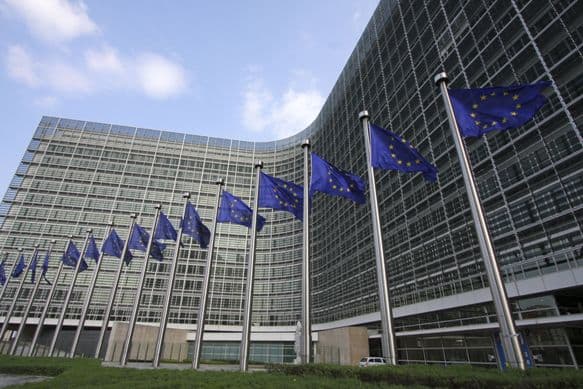
The European Commission looks set to press ahead with plans to lay a 70% by 2030 recycling target alongside a landfill ban on recyclable waste from 2025, under proposals to be put forward later this month.
A draft version of the proposals to be sent by the Commission to the European Parliament and the Council of Ministers, seen by letsrecycle.com, details the resource measures likely to form the EUs long-awaited circular economy package.
Other measures that are included in the policy proposals include an increase in the packaging recycling target to 80% by 2030, with an interim target of 60% by 2020, and 70% by 2025. This is likely to include individual targets for specific materials.
A landfill ban on recyclable waste which includes plastics, metals, glass, paper, cardboard and biodegradable waste is also planned for 2025 and is likely to be extended to cover all recoverable municipal waste by 2030.
Meanwhile, Member States will also be set a 30% resource efficiency target by 2030, which will be linked to raw material consumption and gross domestic product (GDP). The target will aim to encourage the EU as a whole to improve resource productivity, focussing on materials where the most economical and environmental benefit can be achieved.
Key proposals likely to be pursued by the Commission:
Potential targets
- Target to improve resource efficiency by 30% by 2030
- 70% municipal waste recycling target by 2030
- 80% packaging waste recycling target by 2030 with interim targets of 60% by 2020 and 70% by 2025
Landfill bans
- Landfill bans for recyclable waste by 2025 and for all recoverable municipal waste by 2030
- Plastics banned from landfill by 2025
Support at the top of the hierarchy
- Amendments to the Ecodesign Directive to improve product design for recyclability
- New measures for Green Public Procurement
- New financial instruments to support measures at the top of the hierarchy
Other measures
- Harmonisation of waste definitions and streamlined reporting requirements for Member States
- Proposals for Member States to develop national food waste prevention strategies to cut food waste by at least 30% by 2025
In the documentation accompanying the proposals titled Towards a circular economy: A zero waste programme for Europe, the Commission notes that substantial progress has been made over the last two decades to improve recycling and reduce landfill in some Member States, while others still have some way to go.
Policy signals
To encourage this to happen, the Commission states: Strong policy signals are needed to create longer term predictability for investment and change so that materials, such as plastics, glass, metals, paper and other recyclables, re-enter the economy as secondary raw materials.
Setting clear recycling targets for the period up to 2030 will provide such predictability and certainty. Landfilling of all recoverable materials should be effectively banned in the mid-term (by 2030) with an interim ban of recyclable waste by 2025.
Related Links
Environment Commissioner Janez Potocnik has spearheaded the development of the circular economy measures and this week told delegates at the opening session of the EUs Green Week 2014 on Tuesday (June 3) that the policy package would be crucial to provide political commitment and economic practicability in setting the resource agenda in Europe.
Other measures included in the package include plans to align the data collection and reporting systems across the EU, in order waste legislation is applied coherently by all Member States. This will include streamlining calculation methods for municipal, landfill and packaging waste targets.

Register for free to comment