



The target is a bit vague but it's not a mission impossible
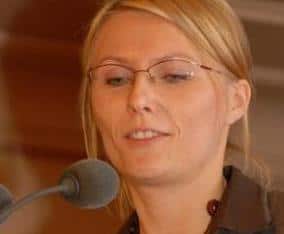
Karolina Fras, European Commission
Speaking at PlasticsEurope's Identiplast plastics recycling event in Brussels yesterday (April 20), European Commission policy officer Karolina Fras acknowledged that there was still “quite a heated debate” as to what the household waste recycling target outlined in the revised Directive meant.
Under the Directive, which was agreed in 2008 (see letsrecycle.com story) and must be transposed into UK law by December 12, 2010, EU member states are expected to achieve a 50% recycling rate for household waste and ‘similar waste streams' by 2020.
Commenting on the task ahead for the Directive to be transposed, Ms Fras said: “The work on targets will require a bit of gymnastics between the EC and member states, the target is a bit vague but it's not a mission impossible.”
And, she revealed that work with underway with the European statistics office, Eurostat, to look at how to get the figures that would be necessary to gauge if the specific targets in the Directive had been met.
The UK government has already sought clarification over just what the 50% target entails (see letsrecycle.com story), and there have been concerns raised over whether the goal requires 50% by weight for each of the four material streams stated in the Directive – paper, metal, plastic and glass – or as a total.
Priorities
Ms Fras explained that the EC's priorities for the Directive now focussed on “monitoring” its transposition by EU member states.
It is also looking at the issue of end-of-waste, and she said that “by and large”, EU member states had agreed on the priority materials selected last month by a technical committee set up to look at the issue.
And, she revealed that the EC had received a “huge amount” of comments on its biowaste green paper, which has already attracted strong views from the UK government (see letsrecycle.com story) and the Association for Organics Recycling.
Hierarchy
The Directive involves a clarification of the waste hierarchy, potentially offering a place for efficient energy-from-waste within the recovery level of the five-step triangle.
And, Ms Fras said that work could be done on the definitions of recycling and recovery in the Directive, including “if necessary specification of the energy efficiency formula”.
However, Ms Fras revealed that the EC “do not have plans to specify” composting with energy recovery as being distinct from composting within the Directive.
“I think it's too detailed for the Waste Framework Directive; that should be addressed in the biowaste work,” she explained.
Prevention
With the new Directive's emphasis on waste prevention, the EC is looking to develop guidelines and indicators for the waste prevention programmes that EU member states are expected to look to introduce.
The Commission is set to report to the European Parliament in 2011, on topics including changes in waste generation and the issue of eco-design, before it reports to the Parliament again in 2014 to allow for the setting to waste prevention objectives which are expected to be met by 2020.
ACR+
Uncertainty on the position of energy recovery in the updated waste hierarchy was highlighted by Jean-Pierre Hannequart, president of the board of directors for Europe-wide recycling organisation ACR+.
He told the event that there were “questions about the distinction between incineration and energy recovery” within the waste pyramid – citing in particular the potentially complicated calculation used to decide whether energy recovery would be classed as efficient.
And, he raised concerns over the Directive allowing for exemptions from the hierarchy based on ‘lifecycle thinking', explaining that “we don't know exactly what the concept of ‘lifecycle thinking' is”.
Plastics
Further comment on the revised WFD came from Paul Augustowski, chief executive of Polish-based plastics company BasellOrlen Polyolefins, who called for an emphasis on energy recovery to achieve the recycling rates required by the Directive.
“Experience from countries with higher levels of recycling is we need the complementary element of energy recovery,” he said, adding that “we believe the winning solution will be a combination of recovery options”
And, he called on the plastics industry to “embrace” the “attractive opportunity” offered by getting involved with energy-from-waste, or other material sectors would beat them to it.

Register for free to comment