



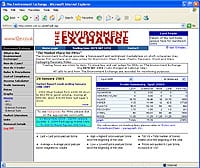
Speaking to letsrecycle.com after the market for 2004 PRNs closed yesterday, managing director Angus Macpherson said the online trading service had seen 407,764 tonnes worth of PRNs changing hands on the spot market. A total of 438,251 tonnes was traded on the Environment Exchange including forward markets for 2004.
– Angus Macpherson, Environment Exchange
Under the producer responsibility requirements of the Packaging Regulations, PRNs are the evidence form that packaging producers or their compliance schemes buy from reprocessors to prove they have paid for their share of UK packaging recovery.
While most PRNs are purchased by compliance schemes through contracts or direct negotiations, the online Environment Exchange is now used for the purchase of about 8% of required PRNs.
Prices
Prices for PRNs traded through the Environment Exchange can differ from the prices seen in trading in the rest of the market, more volatile because of the range of quantities of notes being traded.
With warnings of possible PRN shortages towards the end of 2004, the situation last year got to the point where steel, aluminium and plastic PRNs on the exchange were changing hands for upwards of 100 a tonne – more than 20 times the price of some PRNs seen a year previously.
Some 40% of the PRN trading on the Environment Exchange for the year occurred in the last three months of 2004, Mr Macpherson said, confirming that traders had been holding out hoping for an end-of-year price fall that did not materialise.
He said: “There is no doubt about it that people were holding out until the end of the year. No-one trusted the pundits, people were waiting for the prices to fall. But when they realised that it wasn't going to be like that, demand came to the market and the prices escalated.”
Aluminium
Mr Macpherson said that he knew of some obligated parties that had failed to secure all their PRNs, revealing that the Exchange had been trying to help more than organisation find about 323 tonnes of aluminium PRNs, but that the notes had not ultimately been not found.
While many of the major compliance schemes have said they have purchased sufficient PRNs to comply (see letsrecycle.com story), other sources have told letsrecycle.com that at least one significant compliance scheme is known to have been a few hundred tonnes short of aluminium PRNs, while others have also had compliance problems.
Some compliance schemes or individual businesses obligated under the packaging regulations may now have to haggle with the Environment Agency if they have failed to secure the full number of PRNs to cover their 2004 obligations. Some 2004 PRNs were left unsold at the end of 2004, Mr Macpherson said, but parties would not be able to cover themselves by stating that the PRNs available were too expensive.
He said: “If there are PRNs available on the Exchange, it is very difficult for anyone to argue with the Agency that they cannot get hold of PRNs – but they have to show reasonable steps have been taken, but an issue might be what constitutes a reasonable price.”
Consultation
Following similar sentiments from compliance scheme operators, Mr Macpherson said it was “conceivable that some people put aluminium in their general recycling” quota. He said problems with administration may have been to blame for aluminium PRNs not being available.
| Related links: |
Forthcoming consultations amending the Packaging Regulations would have to make it easier for those with excess materials PRNs to re-distribute them to other obligated parties, he said, adding: “There's got to be a much more flexible system for people to move around tonnage at the last moment given these tough targets.”


Register for free to comment