
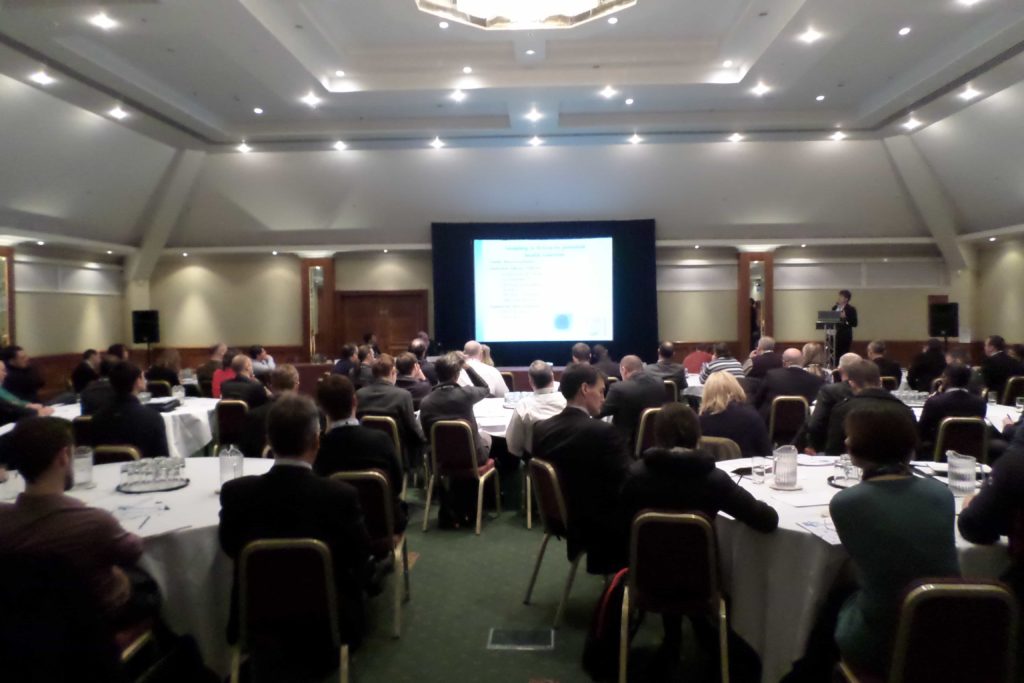
Dr Kerry Walsh, who outlined a proposed protocol update for sampling and monitoring of the potentially hazardous particles, was speaking at the 2014 Bioaerosols Conference in Solihull.
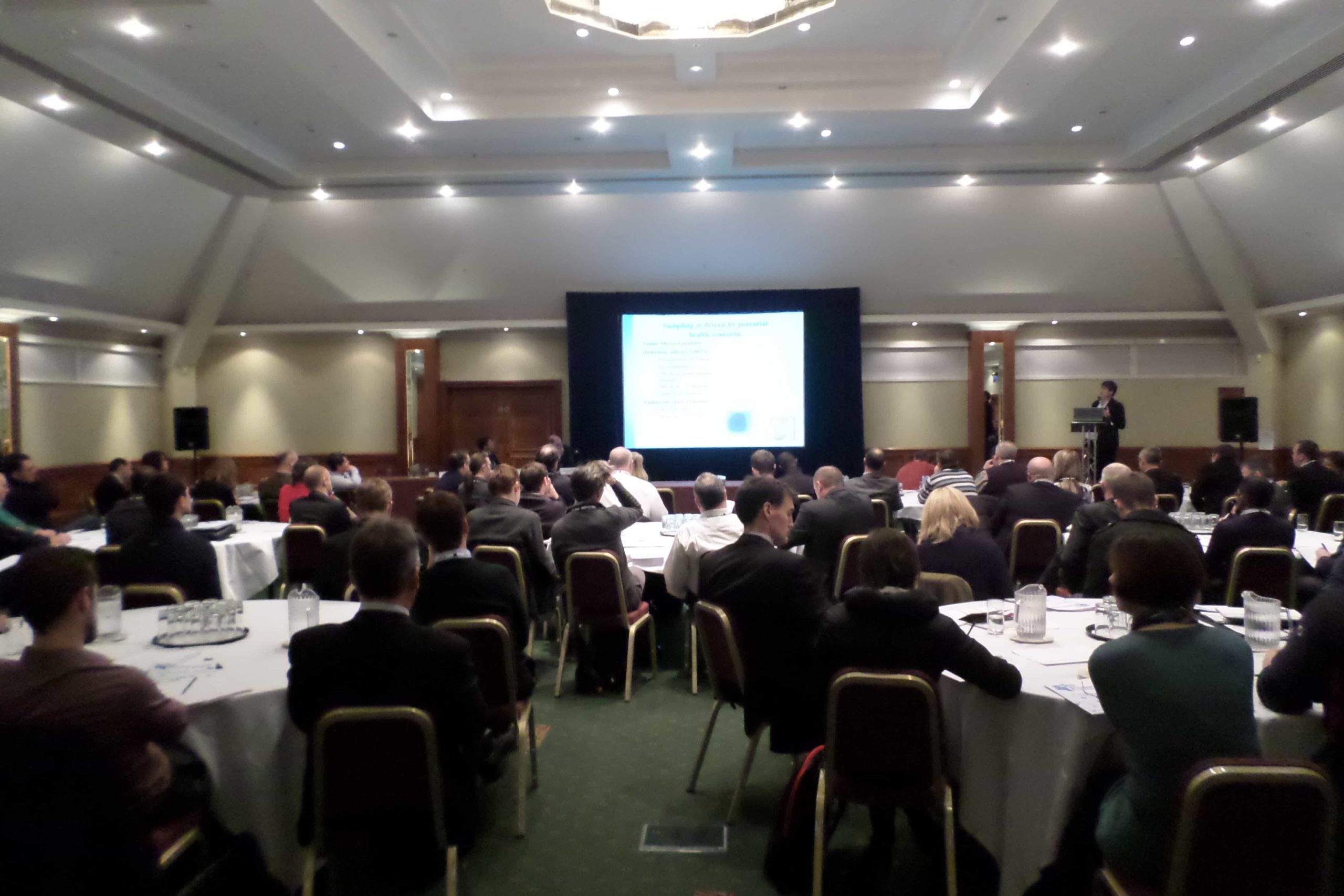
Delegates from across the industry attended the Renewable Energy Association event, which was organised by the Environment Media Group on behalf of the Association’s Organics Recycling Group.
Composting
At present, the protocol to monitor bioaerosols – types of bacteria and fungi made airborne through the shredding, turning and screening of material – is designed for open windrow composting sites.
However, technological advances in the industry now mean that the Environment Agency must consider enclosed facilities with stacks, enclosed facilities with open biofilters, and enclosed facilities with open biofilters in a built up area.
Ambient monitoring is currently carried out on open-windrow sites, but the Agency has indicated that there are more suitable types of monitoring for stacks and biofilters that will help produce more ‘representative’ data across the sector.
Costs
Under the protocol update – put forward in the ‘M9 technical guidance note’ – operators could be expected to pay between £1,500 and £2,000 for ambient and stack monitoring, while sites equipped with biofilters could pay between £1,000 and £6,000 depending on the length of time required to carry out the inspection.
However, Dr Walsh went on to suggest that while the need for representative sampling would increase costs in the short-term, it would also reduce the number of Agency inspections required for each site per year.

She said: “New sites will be expected to maintain quality. Most sites at the moment will get bi-annual monitoring of bioaerosols but this will be dropped to annual monitoring. However, if you show no compliance we will have to repeat the process and revert back to quarterly monitoring.”
Also speaking at the conference was Dr Toni Gladding, senior lecturer at the Open University, who spoke on the difficulties of standardising sampling for bioaerosols when different methods were better at detecting different types of organisms.
Dr Gladding said: “It’s a very complex dynamic that’s not constant. We are trying to get a handle on something that’s very nebulous. It’s hard for the Agency to regulate these kind of emissions. It’s expensive and difficult and it’s a burden on the industry. This stuff costs and that’s not going to go away. Further work is going to have to link what we are measuring with why.”
Hazards
And Dr Peter Sykes, principal lecturer at Cardiff Metropolitan University, also took to the floor to discuss some of the health hazards associated with bioaerosols – advising health surveillance, vehicle cab filtration and PP to help protect workers.
Chairing the event, chair of the Organics Recycling Group, Alexander Madden, said: “The bioaerosols issue is a broad church. It’s something we must address before it gets addressed for us, which would be a poor way to run our industry.”
The first draft of the M9 technical guidance note will include further details on best available techniques for organics operators and is due to be published in spring 2015.

Register for free to comment