


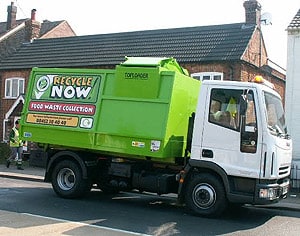
 Mid Bedfordshire is one of the local authorities running the trials to understand costs in food waste schemes |
The aim of the trials is to understand the costs involved in operating food waste schemes, the householders' reactions and to establish some concrete figures for how much waste can be diverted by kitchen waste collections.
Over the last six months, WRAP selected a mixture of rural authorities such as West Devon and urban authorities such as Newcastle to participate in the trials, following on from reports published last week, establishing the 'e;nvironmental and cost benefits' of collecting food waste (see letsrecycle story 6874).
Each scheme will involve between 5,000 and 7,000 households within the local authority’s area and while some of the authorities (such as mid Bedfordshire) began their trials in April – all 17 of the schemes will be fully rolled out over the next month.
WRAP has helped councils to design the food waste trials, introducing 5-10 litre kitchen caddies, a supply of biodegradable liners, and with kerbside containers with lockable lids into households.
The containers used in the trials are manufactured by Straight and Peter Ridley.
Vehicles
Small collection vehicles are also being tested during the trials, including Farid Minimatic, Farid Micro and a small toploader all of which have up to a 3 tonne capacity.
The food waste will be taken from the householders to in-vessel composters and anaerobic digestion (AD) sites to be turned into compost or digestate.
The sites involved in the trials include Greenfinch AD plant in Shropshire; Bedfordia AD plant in Bedfordshire, and TEG composting plant in Todmorden.
|
Food waste trial: |
|
Bradford |
The trials will be monitored by the amount of tonnages collected per round also participating local authorities will provide WRAP with quarterly progress reports, covering how trails going, any issues which have arisen, and quarterly tonnage data.
Next Spring, WRAP will publish reports on the trial's conclusions and, Linda Crichton the manager of WRAP's free advisory service for local authorities – ROTATE- Recycling and Organics Technical Advisory Team. “We hope to be able to get information out to local authorities on our findings on a regular basis, detailing some of the more immediate lesson we have learnt from the trials.”
Good communications are key to the food waste trials and WRAP has produced a range of information packs for resident including kitchen caddy stickers explaining what people can and can't put in as well as well as tags for collection crews to hang on the kerbside bin if there is any contamination.
WRAP is part-funding the trials, but many individual local authorities are putting money into the schemes themselves, particularly with WRAP's funding due to conclude in March 2008. Ms Crichton added: “The hope is that the local authorities will continue the trials independently beyond this date.”

Register for free to comment