

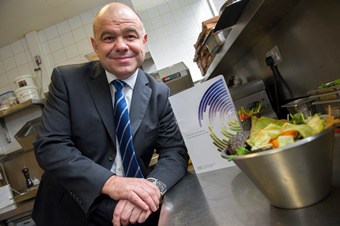
The lack of a clear national strategy for food waste in England is stalling investment in collection and infrastructure and confusing the public, according to report by food waste recycler ReFood UK.
The report praised Scottish and Welsh governments for ambitious approaches to tackling food waste, but suggests England where Defra is to scale back on waste activities in 2014/15 lacks a clear, consistent national strategy to realise the full resource potential of its waste streams and specifically food waste.
.jpg)
As a result, the report calls for: a ban on food waste to landfill by 2020; compulsory collections of food waste from homes and businesses; greater collaboration throughout the supply chain; food waste education in schools; and a more collective approach to food waste collections in England.
Philip Simpson, commercial director at ReFood UK, said that England was well behind other countries as it had a fragmented, piecemeal approach.
It follows comments made by consumer goods manufacturer Unilever and retailer Tesco about having a more joined-up approach to collections in the UK to tackle food waste (see letsrecycle.com story).
Strategy
Mr Simpson told letsrecycle.com: Scotland can do it, Wales can do it, Ireland can do it why cant we do it in England? We need to give a clear regulatory framework a clear mandate to the industry go away and achieve zero landfill by 2020, in the same way that they have done in Scotland.
Launched yesterday (November 11) in London, the ReFood report, Vision 2020: UK Roadmap to Zero Food Waste to Landfill, has been two years in the making in collaboration with sustainability charity BioRegional.
According to ReFood, taking on suggestions in the roadmap could save the UK economy more than 17 billion a year by 2020, return more than 1.3 million tonnes a year of valuable nutrients to the soil and generate more than one terawatt-hour (Twh) electricity a year enough to power 600,000 homes.
‘Scotland can do it, Wales can do it, Ireland can do it why cant we do it in England? We need to give a clear regulatory framework a clear mandate to the industry go away and achieve zero landfill by 2020’
Philip Simpson, ReFood UK commercial director
Defra
The roadmap comes a week after a report on food waste by WRAP (see letsrecycle.com story) and also follows Defras announcement that it would not be introducing a landfill ban on food waste and is to scale back on waste activities in 2014/15 including developing AD in the UK (see letsrecycle.com story).
However, Dean Pearce, ReFood UK commercial manager, denied that the recommendations in the roadmap report came at an unfortunate time and would fall on deaf ears, as the government said it would still intervene in the industry where necessary.
Speaking to letsrecycle.com, Mr Pearce said: We have no control over what the government is going to do. All we can do is raise the issues and propose viable solutions. One thing they did ask is for the private sector to go out and set the agenda, so in many respects the timing is perfect because we as a responsible business are saying actually this is what we think should happen.
And I think it is important to stress that it is not just the landfill ban. Thats one of the key things but thats not all there is in there. There are a lot of practical things about how businesses can do their bit and do the right thing.
WRAP
Referring to last weeks WRAP report highlighting the extent of food waste in the UK, Mr Pearce said: The WRAP report was very, very good because it highlights the issues but there are no real solutions. So you could argue that this provides some of those solutions. It must be a concern to Defra, for example, that household recycling rates have started to plateau. What is the solution to that? This is our solution.
Industry stakeholders consulted on for the roadmap through the Vision 2020 Visionary Panel included the Waste & Resources Action Plan (WRAP), the Chartered Institution of Wastes Management (CIWM), the Local Authority Recycling Advisory Committee (LARAC), the Institute of Hospitality, the Food Chain and Biomass Renewables Association, Unilever and the London Thames Gateway Development Partnership. The panel was chaired by former Secretary of State for the Environment, Lord Deben.
ReFood
In July, PDM Group the parent company of ReFood announced plans to spend 91 million on its ReFood UK operations before the end of 2014. This includes doubling the size of its Doncaster anaerobic digestion (AD) plant as well as investing 44 million in new AD facilities in Widnes and Dagenham (see letsrecycle.com story).
The Dagenham AD facility, which ReFood claims will be the UK’s ‘largest food waste recycling plant’ was yesterday (November 11) also granted planning permission, with construction due to start in January.
PDM Group, which claims to be the UKs largest food waste recycler, has operations on 22 sites across the UK and encompasses beef dripping and lard manufacturer Nortech Foods and fish and chip shop supplier T.Quality. It is owned by German firm SARIA Bio-Industries, which is part of the Rethmann Group of companies that also includes hazardous waste company Remondis.


Register for free to comment