

Collection figures for the first three months since the introduction of the new WEEE regulations have been described as encouraging despite an apparent shortfall in the volume of large domestic appliances (LDA) being recycled.
Data was published by the Environment Agency last week (June 5) showing the collection rate for the first three months of 2014.
Compliance schemes and BIS have claimed that the figures are broadly in line with expectations and a continued fall in tonnages collected reflects the drop in the weight of new products being placed onto the market.
Changes to the WEEE regime in the UK were brought into effect in January as it was alleged that the old legislation was too costly for producers of electrical goods, who were obligated to fund the recycling of waste electricals (see letsrecycle.com story).
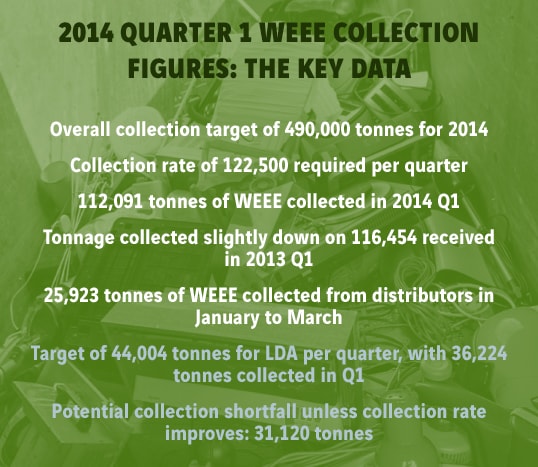
The data, which is available on the Agencys website, shows that a total of 112,091 tonnes of all categories of WEEE were collected for recycling between January to April 2014.
Target
The Department for Business, Innovation & Skills (BIS) has set a target to collect a total of 490,000 tonnes of WEEE in 2014 (see letsrecycle.com story) which means that a quarterly collection rate of 122,500 tonnes would be required.
Currently the UK is collecting less than it did during the period 12 months earlier, when 112,803 tonnes of WEEE were gathered.
Responding to the figures a BIS spokesperson said that this fall in tonnage is likely to have been caused in part by the continuing decline in the amount of display equipment being presented for recycling.
The Waste Electrical and Electronic Equipment collection figures are encouraging. The slight reduction in overall collections appears to be linked to the anticipated drop in the collection of display equipment this year. This is likely to be due to fewer older, heavier televisions being disposed of, and higher volumes of more modern, lighter televisions and other displays becoming waste.
Also commenting on the figures, Phil Morton, chief executive of WEEE compliance scheme REPIC, said he still believed that the figures showed some encouraging signs.
He said: If you look at the broad figures, for the same quarter in 2013 112,804 tonnes were collected for all categories. In the first quarter of 2014 it is 108,981 tonnes. Whilst that represents a fall in tonnage, much of this is in display equipment, which is to be expected because of lightweighting. In fact, in terms of collecting display equipment, the UK has collected 28% of its target in the first quarter.
Overall it is not a bad picture, and it looks like although the targets will be challenging, it looks like they have been well conceived.
LDA
One area in particular where the figures suggest that the UK may fall short of the target is category 1 – large domestic appliances (LDA) where a total of 36,224 tonnes was collected during the first three months of the year just shy of the required quarterly collection target of 44,004 tonnes.
If the current collection rate for LDA is borne out across the whole of the year, this would leave a shortfall of around 30,000 tonnes.
WEEE recyclers claim that a significant proportion of the LDA that is recycled in the UK is being processed at scrap metal processing facilities as it can be done at a lower cost than when treated at WEEE plants.
Related Links
And, the price of evidence per tonne of LDA recycled is said to be the lowest in value compared to each of the other WEEE streams. This means that it there is little incentive for WEEE recyclers to process and issue evidence on the material.
Speaking to letsrecycle.com one WEEE recycler said: A lot of that does not go through AATFs, it goes through the scrap route, and I would imagine that the bulk of what is being reported is that which is coming through retailer takeback schemes.


Register for free to comment