

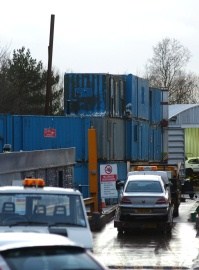
An environmental permit suspension issued by the Environment Agency has beenquashed by the High Court in a move which could give operators more certainty in future about how to get such suspensions lifted.
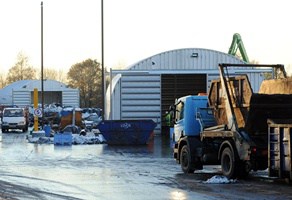
In a judgement on Friday (August 31), Judge Pelling QC in the High Court Queen’s Bench Division overturned an enforcement notice served in February 2012 to metal recycling giant EMR regarding its Parkhall Works metal reclamation and disposal site in Stoke on Trent. The notice related to levels of noise which had prompted 1,103 complaints.
Such Enforcement Notice of Suspension and Requirement to Take Steps notices are issued when the regulator considers that the operation of a regulated facility under an environmental permit involves a risk of serious pollution, regardless of whether the operation is contravening an environmental permit condition.
The notice required the suspension of EMRs environmental permit from midnight on February 26 2012 in relation to all movement of waste onto, within and off the site, effectively requiring the closure of the facility.
But to avoid this, EMR immediately sought and was granted a temporary injunction stopping the notice from coming into effect, until last weeks judgement could be made. If the company had gone through the normal appeals process it would have taken much longer to have the notice overturned.
Regulations
Suspension notices must, under the Environmental Permitting (England & Wales) Regulations 2010, specify the risk of serious pollution; the steps that must be taken to remove that risk; and, the period within which the steps must be taken. The regulator must then withdraw a notice when satisfied that the steps have been taken.
EMR mounted its challenge to the notice on three major grounds that the sites did not cause a risk of serious pollution, that the Agency failed to comply with the requirement to lay out the remedial steps necessary and also that the Agency required the suspension of all movement to and from the site.
In considering the case, the Judge upheld the decision that the site could cause a serious risk of pollution as he said this was one for judgement by the EA.
Pointing to a Noise Impact Assessment carried out at the site showing raised levels of noise and other evidence, he said: The material referred to in the internal decision making record so considered clearly entitled the EA to conclude that a risk of serious pollution was made out and clearly made out.
Steps required
However, on the second count the Judge sided firmly with EMR. He said the requirement in the Regulations to state explicitly the steps required to be taken had not been satisfied by the Agency, who merely stated that EMR was required to take the steps specified in Schedule 2 to remove the risk.

This is despite the Noise Assessment recommending that the introduction of a noise barrier and full enclosure of activities such as axle grinding could be used to reduce noise levels.
The Judge said: It [the Regulation] imposed on the EA a mandatory requirement to specify what steps had to be taken in order to remove the risk that triggered the service of the notice. In my judgement that requirement could have been satisfied by specifying an outcome or outcomes rather than by reference to steps, in the sense of specifying works to be undertaken at the Site if that we considered to be a more appropriate way in which to proceed.
In my judgement, however, what it was not entitled to do was to require the elimination of a risk of serious pollution without identifying the steps by which that was to be achieved… in my judgement EMR is entitled to a quashing order on this ground alone.
Furthermore, the Judge criticised the Agency for not considering suspending the permit for just some of the operations on site, rather than them all, as set out in its own guidance, adding: It is clear from the internal record of the decision making process … that such an approach was not adopted.
Concluding his judgement, he said: For the reasons outlined above, the Enforcement Notice of Suspension and Requirement to Take Steps must be quashed.
Implications
Mr Gordon Wignall, a specialist on waste law from No5 Chambers, was EMRs barrister in the case. He said the case had implications for other permitted waste sites and would force the Environment Agency in future to lay out exactly what operators needed to do to get suspension notices withdrawn, without fear that they may be investing in vain.
Speaking to letsrecycle.com Mr Wignall explained: The judgement means that in future the Environment Agency will have to make those decisions and not leave them up to operators. That is important because in the past they have said you are the operator, you make the money so you find out what needs to be done. This judgement means they have to give details and be precise.
Everyone getting a notice will now get certainty as to what needs to be done. That has never been tested in court before.
Related links
Mr Wignall added that the regulation was there to protect companies who have a notice service on them by ensuring that if they carry out the necessary steps, it will be lifted.
EMRdeclined tocomment, as it said that the Environment Agency could still appeal the ruling.
An Agencyspokeswoman said: “We strive to resolve problems like noise pollution by working directly with businesses and local communities. Unfortunately that wasn’t possible in this case, hence the suspension notice. We are now considering the court’s ruling before deciding our next step.”

Register for free to comment