

Data published this week by the Environment Agency shows that a total of 387,774 tonnes of all categories of household WEEE were collected for recycling between January and September 2015. This means that the UK is on course to meet its government target equivalent to about 43% – set by BIS – to collect 506,878 tonnes of WEEE throughout the year.
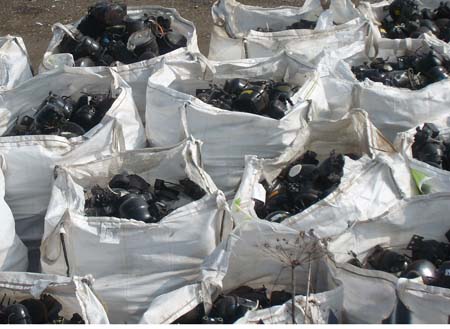
However, the volume of new products (EEE) placed onto the market between January and September 2015 has risen by around 15% compared to the same period in 2014. This could mean that a significantly higher proportion of WEEE could be required to be collected in order to meet the 45% statutory target for 2016.
This need to recycle more is because targets are set with regard to the amount of new EEE put on the market in previous years. The 2016 target, which the UK is legally required to meet under the terms of the WEEE Directive, will be set proportionally to the total amount of EEE put onto the market during the preceding three years.
Accordingly, a significant increase in the volume of EEE placed on the market throughout the full 2015 year (only the January-September figures are known so far) could make the target more challenging in 2016.
| PLACED ONTO THE MARKET – Placing on the market is taken as the initial action of making a product available for the first time with a view to distribution on the UK market |
Thus far, the 2015 EEE figures show that a total of 971,311 tonnes of EEE were placed onto the market by producers up to the end of September. This represents an increase of around 128,686 tonnes when compared to the same period in 2014.
45% target
If the volumes of EEE placed on the market in the last quarter of 2015 were simply to mirror those seen in the final quarter of the previous year, the UK may have to collect as much as 557,000 tonnes of WEEE to meet the 45% target for 2016, letsrecycle.com has calculated.
While collections of WEEE have continued to increase year-on-year, with around 4.9% more WEEE collected in the first three quarters of 2015 than the same period in 2014, an increase of around 50,000 tonnes is likely to be a significant challenge.
However, it is thought that were the target not to be met through collections, the Department for Business could opt for a “plan B” approach and this would meant that rather than pushing for the increase to be met by the system, it could add in ‘substantiated estimates’ of WEEE which are treated outside of the compliance system.
An example of where substantiated estimates could apply is counting a proportion of light iron scrap – which is likely to contain material from large domestic appliances (LDA) – toward the WEEE target. LDA is estimated to make up around 11% of light iron scrap, according to WRAP, and therefore could be counted as ‘non-obligated WEEE’.
WEEE collection
Responding to the data, BIS has reaffirmed its confidence that the overall target for 2015 will be met, but the Department has not offered any view on likely targets for future years.
A BIS spokesman said: “The Q3 data shows we are broadly on track to achieve collections in line with the targets placed on Producer Compliance Schemes at the start of the year.”
Looking at the quarterly WEEE collection figures in detail the sector looks set to meet its targets in most categories of waste, with large household appliances and display equipment looking likely to perform in line.

However, categories where the sector is on course to potentially achieve a surplus of collections including IT equipment and cooling appliances will be under particular scrutiny for the remainder of the year. ‘Over-collecting’ schemes, who have collected more WEEE than needed to meet the targets of their producer members will be particularly affected, as the cost of the collection of this material may not be passed on through the compliance system.
Clarity
Commenting on the data, Vikkie Fitzgerald, project manager at Clarity Environmental, said: “In line with the first two quarters of the year, the Q3 figures show an increase in WEEE when compared to the same quarter last year. Category 3 [IT equipment] collections have jumped almost 2,000 tonnes from the same period in 2014, which is likely to be due to the change in classification of ‘dual use’ EEE. The same can be identified in category 10, although this is higher than the Environment Agency expected for both EEE and WEEE and so is subject to revision.
“The figures show that display tonnage has decreased, although I suspect there has been an increase in the physical numbers recycled, as manufacturers continue to develop lighter, slimmer models for market, and the number of CRTs being recycled has decreased.
“Reflecting the continuing confidence of UK consumers, there is an increase of almost 29,000T in EEE reported in Q3 against the same period last year, which can only be good news for all concerned.”

Register for free to comment