

Despite preparatory works, which began in January 2019 (see letsrecycle.com story), being paused over the summer because of Covid-19, the NLWA says it has been able to make up for lost time by carrying out “overlapping activities”.
Financing
A report which went before the NLWA’s programme committee on 2 November explained that the project has a total central estimated
capital cost of £1.13bn.
It adds that the NLWA drew £100m of Local Infrastructure Rate finance from the Public Works Loan Board (PWLB) on 24 February 2020, and “further finance will be required in March 2021”.
It said officers continue to be “proactive in pressing government for support for the project and certainty over the PWLB”.
It added: “However, with government resources focussed on
the Covid-19 response, officers recognise that further support is not guaranteed,
and certainty may take time to materialise”.
Progress
A progress report submitted to the same meeting reads: “Overall construction of the preparation works has progressed as planned taking into account the shutdown due to Covid-19 over the summer.
“Although this means that preparation works are completing later than the baseline the knock-on impact on the building of the RRF and ERF is being mitigated by further overlapping activities. This is being done whilst maintaining safe separation between activities for safety.”
The NLWA is made up of seven boroughs in north London: Barnet, Camden, Enfield, Hackney, Haringey, Islington and Waltham Forest. It is estimated these seven boroughs will generate around 850,000 tonnes of waste per year by 2025.
Edmonton EcoPark
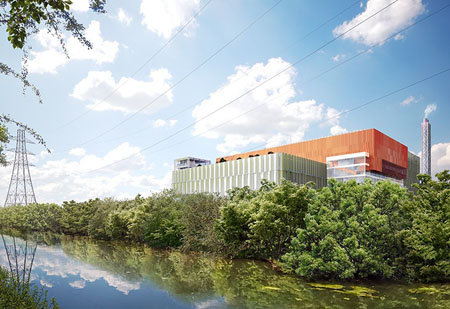
The site’s decades-old existing EfW plant is to be replaced with a 700,000 tonnes per year capacity facility, while the redevelopment will also see the construction of a materials recycling facility (MRF), a “reuse and recycling centre” to enable the public to bring waste directly to the site, and a visitor centre.
“Overall construction of the preparation works has progressed as planned”
Plans for the new £500 million EfW plant were given the go-ahead by the government in February 2017 (see letsrecycle.com story). Once operational, it will incinerate waste and generate heat and electricity.
Progress
The progress report says a “major achievement” was reached on 9 October with the issuing of tender stage documentation for the Engineer, Procurement and Construct (EPC) contract for the EfW plant.
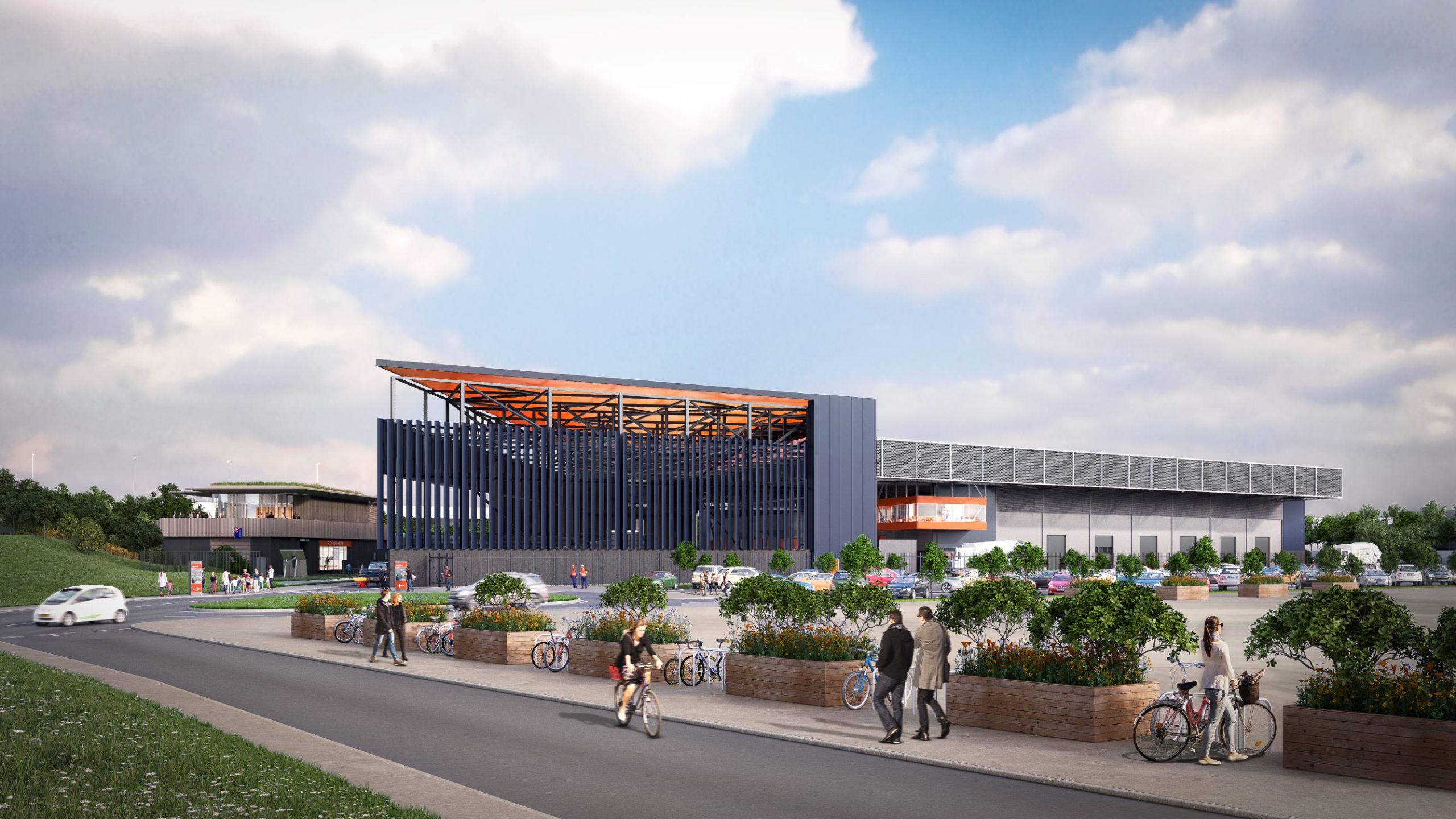
An invitation to tender for the demolition of the site’s current in-vessel composting (IVC) and ash reprocessing plants has also been issued.
Concerns
The report submitted to the programme committee also acknowledges recent concerns about the project’s impact on public health and air quality.
According to a report commissioned by the Greater London Authority (GLA), 15 deaths of London residents per year are attributable to emissions of nitrogen oxides and particulate matter from the capital’s five EfW facilities (see letsrecycle.com story).
Councillor Clyde Loakes, chair of the NLWA, responded to the report on 22 October, saying he was “very concerned” about the “number of inaccurate claims” it made about EfW facilities (see letsrecycle.com story).
And, the progress report submitted to the programme committee reads: “The clear scientific consensus, supported by government’s independent public health advisors, and the associated body of scientific evidence, is that modern, well run and regulated municipal waste incinerators like ours are not a significant risk to public health. We are investing in the world’s best technologies for controlling emissions.
“This will ensure the new ERF performs even better than the existing plant, which is well within the stringent limits set by the Environment Agency.”

Register for free to comment