

Edinburgh and Midlothian councils have named a four bidder shortlist for a jointly-procured contract to build and operate an anaerobic digestion facility to treat their household food waste.
Announced yesterday (May 9), the shortlist of four bidders is drawn from 14 applicants who completed the pre-qualification questionnaire for the deal, which is set to see a successful contractor deliver a 30,000 tonne-a-year capacity plant at a council-owned site in Midlothian.

The bidders are:
- AmeyCespa, the Spanish-owned waste management company;
- Kelda Water Services, a subsidiary of utilities firm Yorkshire Water;
- Shanks, the waste and recycling company;
- And, Viridor Waste Management, the Taunton-based waste company.
The anaerobic digestion (AD) plant contract was first advertised in February 2011, with the two councils who are working together under the banner the Zero Waste Project seeking a sustainable outlet for their combined 20,000 tonnes of food waste generated annually (see letsrecycle.com story).
The food waste treatment facility is intended to help both councils meet requirements under the Scottish Governments Zero Waste Plan regarding landfill bans on source-segregated food waste and recyclables, which are expected to come into force in 2015.
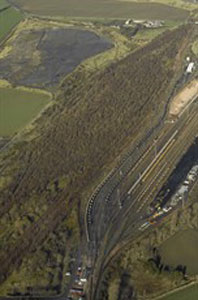
A preferred site for the facilities has been purchased by the councils near Millerhill in Midlothian. And, an application for planning permission in principle for this site, including permission for a 30,000 tonne per year capacity AD facility was submitted in March 2011 (see letsrecycle.com story).
Alternative locations will be considered if they can be shown to offer better value for money but it is envisaged that the Millerhill site would still be the transfer point for all the food waste.
Facility
Councillor Russell Imrie, cabinet member for strategic services at Midlothian council, said: “Now the early stages of the food waste treatment procurement are complete four bidders have been invited to take part in competitive dialogue.
And, Cllr Robert Aldridge, environment leader at the City of Edinburgh council, said: This latest development in the Zero Waste Project will help us to achieve our aim by making best use of our food waste by turning it into energy as well as for use as a fertiliser.
It also means that we are a step closer to commissioning a food waste treatment contract which will ensure that we will no longer have to send our food waste to landfill.”
City of Edinburgh council last month began a trial of food waste collection (see letsrecycle.com story). Prior to contract award, treatment of food waste from Edinburgh will be delivered through a framework involving other contractors.
Procurement process
Once the project team identify the best solutions, the competitive dialogue will end and the remaining bidders will be invited to submit their final tenders. Following the receipt of final tenders a preferred bidder will be chosen.
It is expected that the food waste treatment contract will be awarded by the end of 2012 and that the facilities would be operational in advance of 2015.
A separate procurement process for additional residual waste treatment facilities, believed to be worth in the region of 500 million, is likely to commence later in the year in order to be in place ahead of proposed ban on the disposal of biodegradable waste to landfill, which is planned to be introduced in 2017.

Register for free to comment