

The strategy, which sets out how household waste will be handled between 2014 and 2025, also outlines how the local authority will seek to reduce the amount of waste it sends to landfill, with an increasing role for energy-from-waste (EfW) infrastructure.
Recycling targets of 50% by 2020 and 60% by 2025 have been set by the county council under its revised waste strategy, which was originally launched in 2006. This comes after the council achieved a 40% recycling rate last year a goal which it had previously set for 2015.
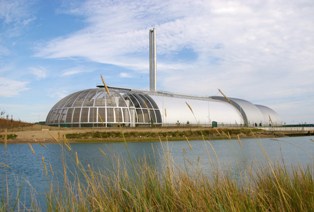
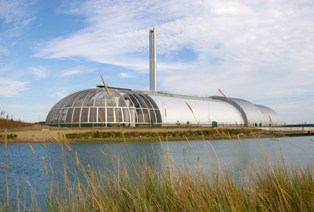
The revision of the strategy comes as the council sends the last of its waste to the Biffa-run Pebsham landfill site near Hastings, which is due to stop receiving waste within the week. The majority of residual waste generated by households in East Sussex will now be sent to the 210,000 tonne-a-year capacity Newhaven Energy Recovery Facility, which began operations in June 2011.
The plant, located on the banks of the Ouse Estuary, is part of a 30-year waste treatment contract signed with Veolia Environmental Services that will run until 2033 (see letsrecycle.com story). In cases where disposal to landfill is the only option, the black bag waste is sent to landfill in West Sussex.
Waste arisings
Under the strategy, East Sussex could limit the amount of waste generated to 995kg per household a year by 2020, with the aim of diverting over 95% of this from landfill by 2025.
To gather public advice on how to meet the new targets, the council has issued an online consultation which will remain open until December 11 2013. Additionally, the document will also ask businesses whether the introduction of a pay as you throw scheme would encourage them to use waste transfer services.
And, due to improvements in kerbside recycling services, East Sussex is also due to close three household waste sites at Forest Road, Wadhurst, and Seaford, which are all within a 10 or 20 minute drive of another facility.
Transformation
Explaining the move, councillor Carl Maynard, lead member for transport and environment said: In 2006, we were reusing and recycling 27% of our waste and converting very little to energy. In 2012/13 we recycled almost 40% of our waste and recovered energy from a further 42%.
Related Links
The work of the county, district and borough councils and the efforts of residents has transformed how we deal with waste. As a result we have exceeded targets set in 2006 for dealing with waste produced in the county.
Cllr Maynard added: With 63 million of savings to find over three years, we are being forced to make some tough decisions. We want members of the public to tell us what they think about the draft strategy. Every tonne of waste diverted from landfill, or better still not produced, saves the taxpayer money. If we can hit these new targets we can make greater savings. We now turn most of the waste in East Sussex into valuable reusable and recyclable materials or use it as a fuel for renewable energy. Waste from East Sussex is now creating enough electricity to power 25,000 homes.
Any decisions reached by the consultation will form the basis of the county councils cabinet meeting in March 2014.


Register for free to comment