

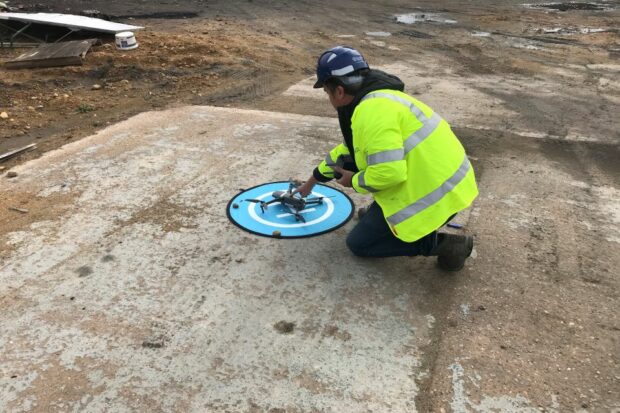
The measures include expanded drone capability, new digital screening tools and a larger specialist enforcement unit, alongside additional funding for the agency.
The regulator said that the measures are designed to better detect illegal dumping, disrupt organised criminal networks and secure more successful prosecutions, as part of a broader push to tighten enforcement activity.
Environment Secretary Emma Reynolds commented: “This Government is aggressively pursuing waste criminals and bringing offenders to justice.
“By increasing the EA’s enforcement budget by over 50% to £15.6 million, we’re investing in cutting‑edge technology that allows us to shut down illegal operators faster and more effectively.”
Drone squad to expand aerial surveillance
The package includes an enhanced drone programme, with 33 trained pilots now deployed across operations to identify and monitor illegal waste sites from the air.
According to the EA, its drones have already logged 272 operational hours since July last year. The aircraft are used to gather intelligence and capture visual evidence of illegal dumping and unauthorised waste sites.
Several drones are now being upgraded to carry Light Detection and Ranging (LIDAR) technology.
LIDAR systems fire millions of laser points per second towards the ground, creating highly detailed three-dimensional maps of terrain and waste deposits.
Until now, LIDAR mapping has mainly been carried out using dedicated aircraft for flood monitoring and landscape analysis. Moving this capability onto drones is expected to allow more precise and flexible deployment over suspected illegal waste sites.
The EA said these detailed maps can be used as court evidence, helping investigators demonstrate the scale, location and development of illegal dumps and strengthening prosecution cases.
New screening tool to flag suspect operators
Alongside aerial surveillance, the EA has developed a new digital screening tool to identify potentially non-compliant operators before they begin transporting waste.
Each week, the Office of the Traffic Commissioner publishes details of new Heavy Goods Vehicle operator licence applications. The EA’s new software automatically scans these applications and cross-checks them against the agency’s public register of waste permits and waste carrier licences.
Where discrepancies or risk indicators are found, operators are flagged to enforcement officers for further checks.
Joint Unit for Waste Crime expands
The enhanced technology and screening capability will be supported by a reinforced Joint Unit for Waste Crime, which has been expanded from 13 to 20 specialists.
Phil Davies, Head of the Joint Unit for Waste Crime Unit, added: “With organised criminals becoming ever more sophisticated, we are adopting new technologies to find and, importantly, stop them.
“Through the greater use of drones, stronger partnerships and more officers on the ground, we will build on our action so far and send a clear message to those committing waste crimes – we will stop you.”
The unit brings together EA investigators and former police officers and works in partnership with other enforcement bodies, including regional police forces and the National Crime Agency, to target serious and organised waste crime groups.
The larger team will aim to improve intelligence development, case building and coordinated enforcement action against high-risk operators and organised networks.

Register for free to comment