

Explaining the importance of work to reduced to contamination and the use of data, Naomi Ross, waste specialist at the Scottish Environment Protection Agency (SEPA), speaking at the letsrecycle.com MRFs and markets conference in Birmingham yesterday (8 March) noted that the dual stream approach was a consideration.

The Scottish Government’ Code of Practice on Sampling and Reporting at MRFs aims to “improve the quality of materials processed through qualifying facilities” by developing standardised testing processes and reporting mechanisms for all input and output materials, Ms Ross explained.
And , he further explained some of the work that SEPA does in its auditing process, which includes conducting its own tests working with the MRFs and comparing the differences, to ensure the testing is coherent, and investigating any discrepancies.
This extends to the point where sites which regularly submit accurate data are checked less often, compared to those where figures are different, which are visited and tested for contamination more.
Ms Ross highlighted the need to work with MRFs to ensure compliance. And, she said that SEPA was also looking to work with companies producing products which frequently contaminate recyclables, including nappy manufacturers such as the producer of the Pampers brand.
The latest contamination data released last year showed that of the 327,760 tonnes of Scotland’s recyclable waste that was received, the contamination rate ranged from 0.91% to 43.04% – a national average figure of 17%.
Commenting on what SEPA will do in the near future, she said cooperation at all stages of the production line is key. She commented: “We will be looking at the manufacturing side of things to help local authorities and looking to give information to the Scottish government, to help with the decision making process and also to help the private sector with everything happening in China at the moment.”
WRAP
Following on from Ms Ross, Vicky Pudner, research and data analyst at WRAP, discussed MRFdata trends and WRAP’s investigation into quality at MRFs in England and Wales.
In particular, Ms Pudner discussed the MRF portal, which includes MRFs covered by the regulations in England and Wales, 88 in England and 12 in Wales.
WRAP began compiling the data in 2014, and deals with the quarterly updates, after validation checks by the Environment Agency . This is slightly different to SEPA, where the data is dealt with in house.
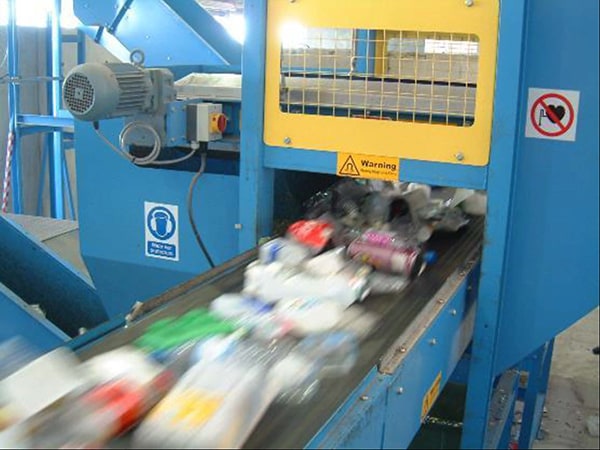
WRAP then checks the data again and analyses any trends. Ms Pudner outlined some of the findings from the portal, which showed some similarities between MRFs which had high contamination rates.
One of the major similarities was with regard to levels of deprivation in the local authority area, which generally led to a higher contamination rate. Looking further, Ms Pudner also said that within those authorities, those which collected PTT had a higher contamination rate than those which didn’t. However, WRAP is looking to further increase the reliability of data, as currently the data provided only explains around 25% of the higher contamination rates.
DRS
Eunomia consultant Mark Cordle concluded the session, and discussed the impact a deposit return scheme (DRS) could have on MRFs. However, while there might be less material to sort from the kerbside, Mr Cordle suggested that the MRF operators could seek contracts to sort material collected under a DRS scheme.
Mr Cordle explained that for local authorities the savings cost would far outweigh any loss in collections, and added that there would also be a saving for MRFs as well. However, many in the audience questioned the costs of such a scheme and whether it implementation would be beneficial overall.

Register for free to comment