


The supply of scrap vehicles is set to increase “dramatically” around the world by 2030, according to a new study.
However, researchers are warning that more advanced recycling technology will be needed to recycle the cars appropriately in line with European law.
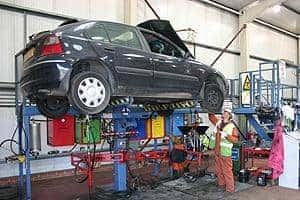
With each vehicle accounting for 1.85 tonnes of waste during its life time – including manufacture, servicing and end of life – this will result an extra 3.65 billlion tonnes of vehicle scrap, the report claims.
The “dramatic increase” is attributed to a number of factors such as world population growth, affordability, the desire for replacement vehicles in the develop world and increasing demand in countries such as China, India, Russia and Eastern Europe.
At present, cars are relatively easy to recycle as around 75% are made up of metal which has a high value as scrap.
However, the reports authors are warning that more technological advances will need to be made in the EU, where the ELV Directive will require than 95% of a motor vehicle is recycled or used in energy from 2015.
In particular, demand for new disassembly equipment and enhanced pre and post shredder technologies is expected to grow, which is currently proving difficult for many recyclers.
Concern
Professor Allan Hutchinson, from Oxford Brookes University, said: “Our report shows that the recycling challenge is not a concern for the distant future… it is with us now, and will become even greater with every year that passes.
“How to dispose of vehicles more effectively may not be the most glamorous part of the motor industry, but it may well ultimately be the most important for a sustainable one.
“We believe this work can form the basis for the extensive research necessary to develop new technologies together with the automotive industry to ensure its obligations can be met in a timely manner, ” he added.
The report has been produced by the Oxford Brookes University-led network for the design and dismantling, reuse and recycling in road vehicles, DRIVENet.

Register for free to comment