


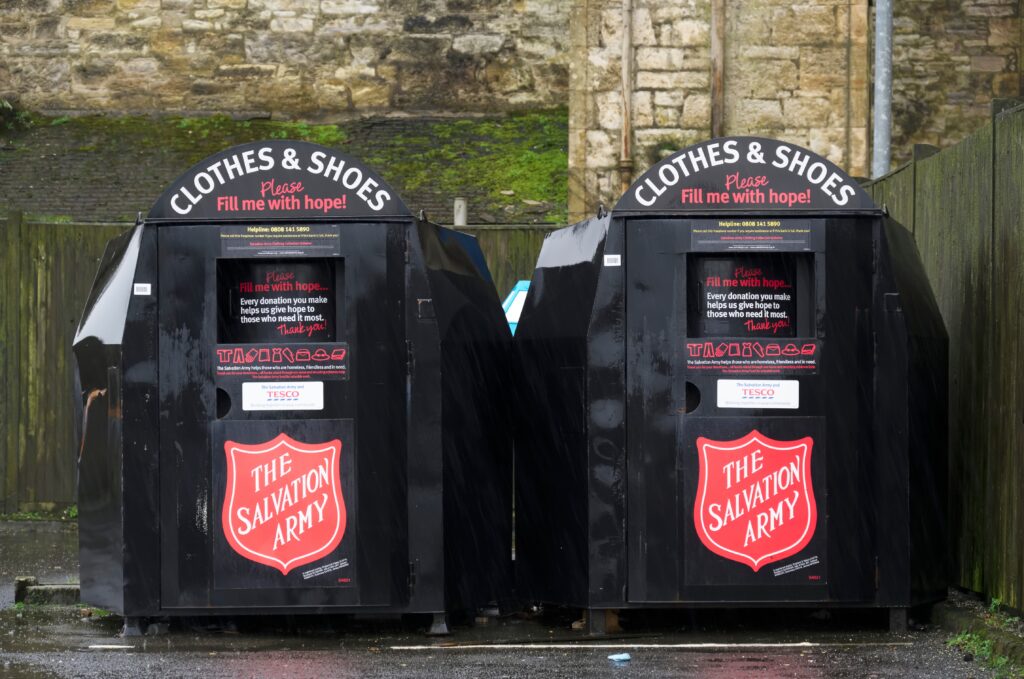
The move comes after SATCoL, the trading arm of The Salvation Army, confirmed it will pause its collections in December last year.
The charity has worked in partnership with the Devon Authorities since 2016 to provide textile recycling services at kerbside points such as car parks.
Residents will still be able to drop off clothing at the textiles banks located at Household Waste Recycling Centres (HWRCs) which are operated by waste management company Suez.
Councillor Jacqi Hodgson, vice chair of the Devon Authorities Strategic Waste Committee, commented: “The rise in cheap, low quality clothing is causing a huge problem for the second-hand textile industry and the environment.
“We have worked with SATCoL for many years and understand the difficulties of the textile markets.
“It is disappointing to lose the textile banks but we support their decision to scale back.”
‘Unsustainable volumes of used textiles’
The company recently paused its collection contracts with HWRCs across the UK between 22 December 2025 and the end of January 2026, traditionally the busiest period for clothing donations.
At the time, SATCoL said donation volumes had “soared”, creating operational challenges that risked undermining its ability to raise funds for The Salvation Army.
A SATCoL spokesperson previously said the industry is facing “real challenges” linked to both the volume and quality of donated clothing, adding that it would carry out a full review of its future position in early 2026.
In a statement, SATCoL said the decision followed a strategic review prompted by “changing market conditions” and the need to ensure the long-term sustainability of its operations.
The company said it was adjusting its clothing bank network to better manage what it described as “unsustainable volumes of used textiles across the UK”.
SATCoL explained: “As part of this review, a number of clothing banks will be removed.
“However, many other banks remain available for public use, and we continue to expand our network of more than 250 charity stores.
“These changes allow us to maximise fundraising capabilities, minimise costs and redirect resources to other impactful reuse and recycling services.”

Register for free to comment