


Yorkshire-based Berryman has secured the contract to recycle what is thought will be 12,000 tonnes per year of glass jars and bottles collected from households by East Devon district council, Exeter city council, Mid Devon district council and Teignbridge council.
The length of each contract which both commence on January 1 2014 is three years with the option to extend for a further two years.
According to Devon county council which began procuring for the glass and paper contracts on behalf of the four authorities in August (see letsrecycle.com story) the contracts are together worth around 11 million to the councils over five years.
The county council said the income would be invested in the continuous improvement of the authorities operational services.
Although only four Devon councils have committed to the contracts through a Memorandum of Understanding (MoU), the remaining four Devon district councils which form the Devon Authorities Waste Reduction and Recycling Committee, have the option of joining in the contracts at a later date.
Glass
Recresco, O-I Recycling of Harlow and Viridor are also thought to have tendered for the glass contract, as well as current contractor Recresco, which processes the authorities amber, green and mixed glass at its Cwmbran facility and clear glass at its plant in Southampton.
Under the new contract with Berryman, collected glass from Devon will have to travel around 200 miles further to Yorkshire than it does currently to either Recrescos Southampton or South Wales facility.
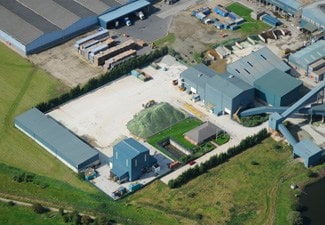
However, Berryman is thought to have been interested in the Devon contract partly because it has recently upgraded its South Kirkby and Knottingley glass plants and is seeking to increase its feedstock.
Neither Berryman nor the county council have disclosed the price paid for glass under the new contract.
Prior to Recresco, Berryman also previously held a three-year contract to recycle glass from the county council, eight district councils and the two unitary authorities of Plymouth and Torbay which all formed DAWRCC (see letsrecycle.com story).
Paper
Palm’s success in Devon is a major breakthrough in a territory long-held by Kent-based Aylesford Newsprint which also competed for the new contract.
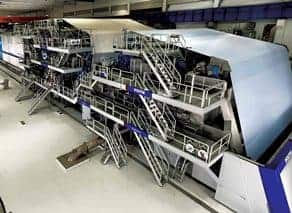
Aylesford has held the Devon contract for 18 years having originally secured it in 1995 when its current main paper machine was installed. It was reawarded in 2003 for 10 years (see letsrecycle.com story).
Winning the Devon tender is seen as being particularly important for Palm, which entered the UK market in 2010. While it has a large number of UK suppliers, it is still thought to be topping up its feedstock for King’s Lynn mill with some used newspapers and magazines from the European mainland. Sourcing more material in the UK will help reduce its costs and the Devon feedstock is also seen as likely to be of a higher quality compared to some supplies received from other parts of the UK.
‘Securing material of the right quality remains a priority for Palm Recycling and we are looking forward to working with Devon county council’
Mandy Kelly, business development director of Palm Recycling
Palm noted that the contract will ensure that the Devon material is recycled in the UK and gives the council a “clear audit trail of where and how its recyclables have been used as a resource”.
Mandy Kelly, business development director of Palm Recycling, said: Palm are delighted to have been awarded this contract as it is a proven quality product which is an essential pre-requisite for reprocessing into fresh newsprint. Securing material of the right quality remains a priority for Palm Recycling and we are looking forward to working with Devon county council.
The Devon material will have to travel about a further 74 miles to get to King’s Lynn rather than Aylesford which is 204 miles from Exeter. In the past Devon and Aylesford had assessed moving the used newspapers by rail instead of road but this had proved to be too expensive and this remains the case.
The price to be paid by Palm under the Devon contract has not been disclosed but it is thought to be above the current spot market rate which is in the order of 100 a tonne by as much as 30-40.
Plymouth
Plymouth city council, which is also believed to separately hold a paper recycling contract with Palm, recently notified the other Devon authorities that it would be leaving the Devon Authorities Waste Reduction and Recycling Committee (DAWRRC) from April next year.
In a statement, Plymouth said it had decided to leave DAWRRC in order to help towards budget savings it needs to make of around 60 million.
In 2012/13, the Plymouth city council contributed 31,000 to DAWRRCs overall 231,769 budget, of which 15,000 was spent directly on projects in Plymouth. As such, Plymouths withdrawal is likely to impact on DAWRRCs proposed budget for 2014/14.
However, DAWRRC is also currently investigating the possibility of launching a county-wide recycling partnership involving all Devon district and unitary authorities in order to reduce costs and provide a good quality service.
To this end, consultancy Eunomia has been commissioned to assist the DAWRRC authorities on assessing the feasibility of a joint waste authority a Devon Waste Partnership or other forms of waste service integration. The Eunomia report is due this month.

Register for free to comment