


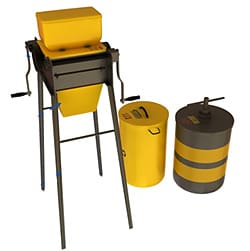
The new device could help protect some of the poorest waste “scavengers” from infectious diseases picked up while making a living picking recyclable materials out of unregulated, open landfill sites.
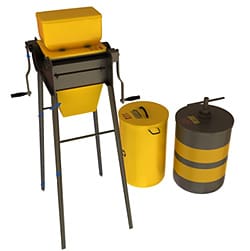 The clinical waste treatment system developed by Sahil Chopra is designed to be simple to operate and repair |
A designer from Northumbria University teamed up with an expert in clinical waste management on the project.
It could see the invention – an inexpensive waste-grinder and disinfection system – revolutionise the way in which Third World hospitals dispose of their dangerous clinical waste.
Support
Inventor Sahil Chopra, from the Newcastle-based university's Department of Design,
completed his designs three weeks ago, and is now in India to seek support and further develop the idea.
Presenting details of the project to a conference of postgraduate waste research yesterday, Mr Chopra's partner in the project, Dr Malcolm Holliday of the Newcastle Hospitals NHS Trust, explained that many hospitals in developing countries can afford to do little more than dump their clinical waste in the street.
This often ends up in open landfill sites where impoverished waste pickers risk their lives daily to recover recyclable materials.
Microbiologist Dr Holliday said: “Many of these people at the bottom end of society are very prone to injury and infection, which can then be spread amongst their families and the community.”
He said items like syringes and linens infected with HIV-positive substances, hepatitis and tropical diseases litter landfill sites, adding: “This infectious material needs to be made safe.”
Simplicity
The device being developed by the researchers is designed to avoid the need for complex, expensive engineering such as the large incinerators used by hospitals in the UK.
Its simplicity would also allow for easy operation and repairs. The grinding component of the system is based on hand-powered sugar cane grinders already in widespread use in developing countries like India. Waste is broken up by the grinder so that disease-killing calcium hydroxide can disinfect the materials.
 Designer Sahil Chopra |
Mr Chopra is seeking support from organisations including the Indian government, But one of the barriers encountered has been the concern that the device might impact on the income of the waste pickers. Items like syringes and needles, given a cursory clean for re-use, are valuable resources.
However, Dr Holliday said the device would affect only a small proportion of the recyclable materials in landfill sites.
He said: “We are not trying to take away these people's living, we are trying to take away some of the more dangerous parts of the waste. With one of these machines in hospitals with someone treating waste there, 99.9% of the waste will remain in the landfills as a resource to recycle.”
Dr Holliday was presenting findings of the project to the annual “Tackling Waste” conference for postgraduate researchers in waste management. The conference, organised by the network of UK universities, WARMNET, is being held at the University of Nottingham until today.
Europe
Dr Holliday told letsrecycle.com after his presentation that the project was also receiving some interest from health authorities in Eastern Europe.
| Related links: |
He said investment in healthcare systems was often limited to urban areas in countries like Romania, and that rural communities faced problems disposing of clinical waste safely.
But he warned of the difficulty of gaining financial support for projects like his, particular in terms of setting up production facilities. He said: “There are a lot of hurdles in this country to setting up – no-one is going to buy this until it is proven. This is not quite ready – but it really is getting there.”


Register for free to comment