

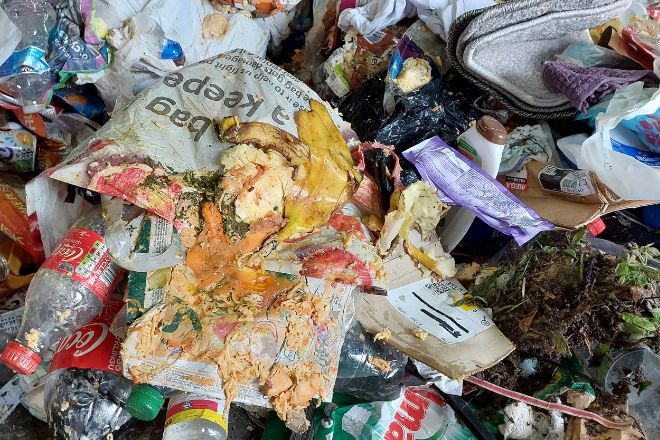
The campaign was launched yesterday (18 September) and will encourage residents to adopt two simple habits for using their blue commingled recycling bin.
These are:
- Check Before You Chuck: Instead of relying solely on packaging labels for recycling information, residents are encouraged to visit the Council website, which offers a convenient A-Z guide explaining how to handle common household items. With up to 70% of household waste potentially recyclable, residents can discover alternative methods of recycling even if an item cannot be placed in the blue bin.
- Wash and Squash: The most valuable recycling is clean and dry. Items with residual product, such as empty food cans, toiletry bottles, and food trays, should be rinsed before placing them in the blue bin. Additionally, flattening large cardboard boxes can create more space in the bin.
Collections teams will now also regularly inspect the contents of blue recycling bins for contamination. Bins with visible contamination will not be collected, and it becomes the responsibility of residents to remove the contamination before the next scheduled collection.
Contamination
The council state that of the contamination found in recycling, food waste and leftover takeout containers are of a particular concern as they tend to spread within collection vehicles, leading to extensive contamination of otherwise clean and dry recyclables.
Moreover, batteries and items containing batteries, such as old mobile phones and vape devices, pose a significant fire hazard both in collection vehicles and at processing facilities. Consequently, the council urges residents to never dispose of batteries or battery-containing items in their wheelie bins.
‘Recycle more’
Councillor Hardyal Dhindsa, cabinet member for communities and street pride said: “Most of our residents are great at recycling and do the city proud.
“However, as a city we can recycle more and we can recycle better. We know it’s easy to think that one wrong item doesn’t matter but it really does. Just one household not recycling correctly can spoil it for all their neighbours. Whilst rising costs continue to effect residents, they also add pressure to the Councils budget. If everyone recycled correctly, the money saved could fund services like free bulky waste collections, street cleaning and help protect vulnerable residents.”
Currently, Derby recycles 38% of household waste, falling short of the government target of 55% by 2025. The new campaign hopes to bring about a positive change in recycling habits and move the city closer to meeting this target.
Contamination
This move comes after Kirklees council earlier this month (see letsrecycle.com story) warned that it will consider removing recycling bins in the area as contamination rates are costing the authority “between £400,000 and £450,000”, with the council’s contractor Suez also raising concern.
WRAP also noted in its gate fee report for 2022 that MRF operators are clamping down more on contamination.

Register for free to comment