

A new ‘lighter-touch' approach to the enforcement of waste legislation by both the Environment Agency and local authorities is one of the policies being considered under the government's waste review.
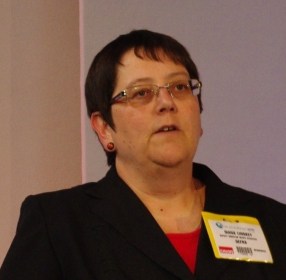
That is according to Diana Linskey, the deputy director in charge of the process at Defra, who yesterday (January 19) spoke during a 2degrees network webinar on the review's progress to date.

We are looking at enforcement – whether there is scope for reducing it
Diana Linskey, Defra
Ms Linskey explained that, while the review was looking at all aspects of waste policy in England, this was all subject to the fiscal deficit and localism agenda, meaning that the role of central government would reduce.
She said: “The fiscal deficit is key so we can't be looking at measures which are placing greater pressure on the public purse.”
“We are thinking about what big society means and how the part played by the government can shrink”.
Notably, the deputy director pointed to a new approach to the enforcement of waste legislation- adding that “something would be published” on the subject.
She said: “We are looking at enforcement – whether there is scope for reducing it. We are taking forward a risk-based approach to make sure we are targeting enforcement on people who can't demonstrate a good track record, targeting illegal operators etc.”
“We want to make sure we target our resources where absolutely needed.”
Responsibility
In a similar vein, Ms Linskey said that responsibility deals – whereby businesses agree to voluntarily tackle waste- were something which the government was pushing forward. This would build on the progress achieved under the Courtauld Commitment for the grocery sector without the need for prescriptive legislation. She said: “Possibilities include the hospitality sector”.
Another way the government is planning to help business is by breaking down the barriers to SME recycling, Ms Linskey said. This is important because the government wants to see more integration of business and household waste.

She said: “Local authorities want to do more on business waste and recycling but LATS is seen as a barrier to providing recycling services to SMEs. We will be talking to ministers about whether barriers can be reviewed.”
Evidence
A call for evidence for the waste review closed in October 2010 and was accompanied by an online survey and discussion which closed in September.
Defra received over 300 detailed responses, including 101 from local authorities, 57 from businesses and 38 from trade associations.
Councils expressed support for: Locally determined collection regimes and frequency; a desire to see landfill tax reinvested in infrastructure; extended producer responsibility for WEEE and packaging in particular; and, support for focus on waste minimisation.
Meanwhile businesses said they wanted: More certainty on taxes and strategic direction from government; more use of carbon rather than tonnages for measuring purposes; incentives to encourage the design of reusable products; support for energy from waste but without the government being prescriptive about technology; and, de-regulation.
Ms Linskey confirmed that preliminary findings of the review would be published in May 2011, alongside a number of other documents such as a number of waste scenarios for 2030.
She said: “The review has a 2030 horizon but with a clear focus on what can be delivered in this parliament.”


Register for free to comment