


Sheila McKinley has had responsibility for packaging waste since January 1996, joining the environment department division after being a diplomat in Switzerland and developing the Environmental Know-How fund in the UK.
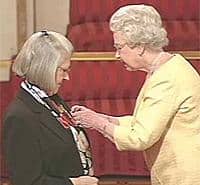
Her work saw her recognised in the 2004 New Year’s Honours List, when she was awarded an OBE (see letsrecycle.com story).
As she arrived at Defra, the whole idea of the packaging waste recovery note (PRN) system of packaging producer responsibility was in its infancy.
Her first involvement had come a month before her official start at the Department, when she managed to prise open the door and look in on the famous December 15 meeting in 1995, when John Gummer threatened to hold “captains of industry” in a room at Defra – over Christmas if need be – until they agreed on a way ahead for the packaging recovery system.
She recalls that at the time there was virtually no understanding of packaging and associated environmental responsibilities within British industry. “At the beginning, I felt it was difficult to talk to industry. They weren’t particularly thrilled at the idea of conversations about how much packaging they were using and the concept of targets.
“Some people insisted they were nothing to do with packaging – widget makers would say they made widgets and packaging for them was nothing to do with the widget maker.”
The situation has changed completely now, says Mrs McKinley. “Now everyone realises the significance about the packaging they use and I am struck by the constructive relationships we have had with industry. Since the early days companies have also realised the savings that can be made. I remember talking to one company and they found they had made great cost savings through minimising their packaging.”
PRNs
The PRN was effectively born that day, although not with the idea of the financial allure that they have today.
Mrs McKinley explains: “The PRN in ’97 was meant to be a documentary evidence note. Producers said that they want confidence that this reprocessing is being carried out, so this led to accreditation. This gave the PRN a role as an anti-fraud mechanism. Further discussions followed over how end-use markets were going to have to be developed and so they became a channel for this.”
Now everyone realises the significance about the packaging they use, and I am struck by the constructive relationships we have had with industry
Sheila McKinley
But, Mrs McKinley points back to the origins of the PRN when she is asked about whether more PRN money should be spent on infrastructure. She says, quite pointedly, “I have quite frequently reminded everyone that the PRN demonstrates compliance. The fact it is tradable and that there is a market for it has meant the system is cost-effective. On that front, I feel particularly happy.”
“Inappropriate activities”
Reflecting on other events during here term of office, she points to the fact that three fact-finding missions were carried out into paper, wood and plastics. She accepts that no widescale evidence of wrongdoing was found, although there were “inappropriate activities”.
These missions appear to have influenced Defra to the extent that there is more determination now to ensure that the system runs correctly.
Mrs McKinley reveals that the Department is “looking at more administrative penalties as well as criminal liabilities under the system. This is the right to do this sort of thing. If there is really going to be more monitoring then incurring an administrative penalty is perhaps helping to create a mixture of sanctions.”
She agrees that data is crucial to the PRN system. “I have a remaining sense of puzzlement over this. Everyone has to know what goes on and it all has to be well-managed. We now have an online database for companies to submit data, but I still have that feeling that some people are cautious about telling us their figures. The more information we have, the more accuracy we will have which is in everyone’s interest.”
Defra’s work has been made easier by the support of the Advisory Committee of Packaging. Mrs McKinley says that ACP has been very useful in all its work. “The ACP chairman John Turner has made it action-orientated and he has helped set up the whole task force system with a very constructive set of people.”
Newspaper sector
While her early responsibilities in the post were dominated by packaging, in recent years with the broadening of producer responsibility, Mrs McKinley has taken charge of a range of topics including voluntary agreements with newspaper and periodical publishers and the direct mail industry. And, there has been work on the Waste Electrical and Electronic Equipment Directive and End of Life vehicles.
Achievements within the newspaper sector of reaching high levels of recycled content have pleased her. She says: “It was no means evident that they weren’t going to meet these targets. It has proved very important and has created a market for material.”
Leaving Defra this week means that she misses working with a potential fourth Environment Minister, assuming that the Gordon Brown government brings a change of leader for the recycling division.
Considering Mrs McKinley’s long period in her packaging role, she has worked for surprisingly few ministers, largely because Michael Meacher served as environment minister for six years until 2003. Mrs McKinley reflects that “Michael Meacher had a very intellectual approach to things and was well-informed. He knew a lot about packaging.”
She then worked with Elliot Morley, as environment minister. “Mr Morley was very sharp. It is hard for visitors to Defra in a 30-minute meeting to judge politicians. I have always found ministers were quick to pick up on the dossier and with Mr Morley I had a good level of ministerial involvement.” The same is true, she says, of Ben Bradshaw who currently holds the packaging brief, and Mrs McKinley says she has enjoyed working with him.
Looking ahead, on a personal note, she plans to enjoy her retirement, but does not intend to leave the sector entirely. It seems likely that in a consultancy role, Mrs McKinley may well find time for some future projects.

Register for free to comment