

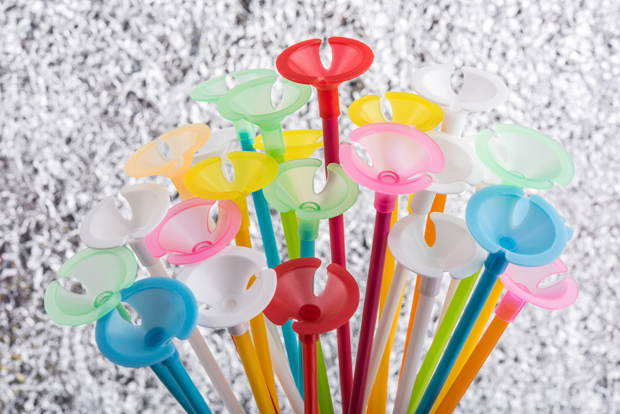
First announced in January, the ban will will outlaw the supply and selling online and over the counter of single-use plastic plates, bowls, trays, containers, cutlery and balloon sticks. Nor can the items be offered to the public, such as in a restaurant.
In guidance earlier this year (see letsrecycle.com story), Defra outlined that the ban on these items will include:
- online and over-the-counter sales and supply
- items from new and existing stock
- all types of single-use plastic, including biodegradable, compostable and recycled
items wholly or partly made from plastic, including coating or lining
There are some exemptions however, the items can be sold if being supplied to another business, and if if the items are packaging, so “pre-filled or filled at the point of sale”.
Examples of this type of packaging include a pre-filled salad bowl or ready meal packaged in a tray, a plate filled at the counter of a takeaway or a tray used to deliver food.
Defra said these items will be included in its plans for an extended producer responsibility scheme.
‘Extensive work’
In its statement earlier, Defra declared: “No business – whether retailer, takeaway, food vendor or part of the hospitality industry – will now be able to sell single-use plastic cutlery, balloon sticks nor polystyrene cups and food containers in England.
“The supply of single-use plastic plates, trays and bowls has also been restricted. The new regulations were announced in January and extensive work has taken place throughout 2023 to provide further guidance on the ban for businesses.”
The department also outlined that research shows people across England use 2.7 billion items of mostly plastic single-use cutlery and 721 million single-use plates every year, but only 10% of these are recycled.
‘Big step’

Environment minister Rebecca Pow said: “This new ban is the next big step in our mission to crack down on harmful plastic waste. It will protect the environment and help to cut litter – stopping plastic pollution dirtying our streets and threatening our wildlife.
“This builds on world-leading bans on straws, stirrers and cotton buds, our single-use carrier bag charge and our plastic packaging tax, helping us on our journey to eliminate all avoidable plastic waste by 2042.”
Industry
Defra also outlined that the government has “engaged closely with industry to support them” in getting ready for the new requirements, including by giving them nine months from the publication of its response to the consultation on the ban to prepare and use up excess stock.
It added that it has been “working closely” with relevant trade bodies and local authorities to help businesses and Trading Standards officers be ready for the new rules.
Support
Responses from the public to the consultation on the ban demonstrated support, with 95% in favour of all prohibitions.
Helen Bird, head of material systems at WRAP, added: “Single-use plastics dominate our world, and have even become embedded into the planet itself. This ban is an important moment in tackling the scourge of plastic pollution.
“Since 2018, WRAP has worked with businesses under The UK Plastics Pact to eliminate all unnecessary and unrecyclable plastic packaging. Since then, 620 million single use plastic items have been removed from shops. But we must go further, including on plastic packaging on most fruit and vegetables – and help save shoppers money by allowing people to buy what they need.”
Regulation
Local authorities will carry out inspections to make sure the rules are being followed. Trading standard inspectors will be able to: visit a shop or store; make test purchases; speak to staff; ask to see records.
If the law is broken, said Defra, inspectors can order a business to cover the cost of the investigation.
Complaints about a business breaking the law can be made to Trading Standards.


Register for free to comment