


Under the revised Waste Framework Directive (rWFD) all EU member states, including the UK, must publish a Waste Prevention Programme by January 2014. The plan must set out waste prevention objectives and describe existing prevention measures and evaluate their usefulness.

The Waste Prevention Programme for England Call for Evidence consultation highlights a number of priorities, barriers, opportunities and ongoing action which needs to be taken in order to reduce the amount of waste arising in England.
Defra identifies a number of priority areas and is seeking views on this. The priority areas are: food; textiles; construction and demolition; chemical and health care sectors; paper and card; electronic and electrical equipment; and furniture. These have been chosen based on the carbon impact of the waste, the tonnage of waste produced and the hazardous nature of the material.
Looking at textiles, which is one of the priority areas, Defra says around 2.1 million tonnes of material are discarded every year with an estimated 140 million worth of material going to landfill. It adds that extending the average life of clothes by three months would lead to a 5-10% reduction in carbon, water and waste footprints for the items and around 2 billion in resource costs.
Another priority area is food waste. According to Defra, 15 million tonnes of which are wasted every year over half (7.2 million tonnes) of this is from households. Over 60% of the waste is avoidable, and 3.8 tonnes of CO2 emissions are caused by the production, transport and disposal of each tonne of food waste.
Activities
Looking at what action needs to be taken, the Department says: Preventing waste from occurring delivers the best environmental and economic outcome, and is key to moving towards a more sustainable economy. The term waste prevention includes many different activities, from designing products so they last longer, are easily repaired and use fewer or less hazardous resources, to ensuring services are available so that unwanted items get a second life through reuse.
Defrasays that theWaste Prevention Programme (WPP) is a priority and it aims to support growth and help householders and businesses save money.
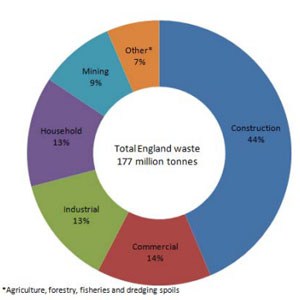
It adds that simple measures to produce less waste which pay back within a year could save UK businesses around 17 billion and avoid greenhouse gas emissions of 16 million tonnes of carbon annually. It added that waste production in England is gradually declining and in 2010 total waste generation was estimated at 177 million tonnes a decrease from 325.3 million tonnes in 2004.
Barriers
The Department has highlighted a number of market failures and barriers which include investment and time.
It says: There are a number of market failures. The real costs of manufacturing, purchasing or disposal may not be fully apparent, for example, from the physical cost of the loss of resource where material is purchased but not fully utilised, to a lack of understanding of the full environmental damage of the disposal of an item.
Other barriers include the need for initial investment for some waste prevention actions and constraints on the availability of resources, such as finance, staff capacity (including management) and time. A supportive corporate culture and leadership commitment to integrate waste prevention activities is also important.
Defra concludes that local and national government has taken significant steps forward in waste prevention. It adds thatthere are a number of good examples of action that has already been taken by businesses, charities and social enterprises as well as consumers to reduce the amount of waste arising and increase reuse.
Businesses
The call for evidence is split into five sections an introduction, background information, business waste, consumers and communities and government and the public sector. Waste arisings in the different categories of waste are outlined alongside the benefits of waste prevention and reuse. Additionally, Defra highlights the work that has also been taken in the various areas and the progress made so far.
Up for debateare the metrics used to measure waste prevention, which Defra noteshave theirdifficulties. The Commission has suggested a number of metrics which would be used by member states, including the quantity of waste collected per person and the use of waste preventing services such as reuse and repair centres.
On the topic of business waste, Defra notes limitations on the data available. The Department adds that it is in the interest of businesses to reduce their material requirements and increase savings. Potential business opportunities include: developing products with extended life times; product take-back schemes; and, new relationships with customers which sees product leasing and maintenance offered more widely.
Related Links
One barrier to waste prevention by businesses is lack of customer demand, according to Defra, which acknowledges that customers rarely make demands specifically for waste prevention. Despite this, Defra notes that businesses have taken action to reduce waste.
Overall Defra says there are opportunities for economic growth and employment in repair, reuse and remanufacturing of products and added that the UK economy will grow by moving to more sustainable practices.
Consultees
The call for evidence is open until April 29. The Department has said it will publish its first Waste Prevention Programme by December 2013.
Organisations being consulted on the Waste Prevention Programme include a number of waste management firms, charities, councils, retailers, manufacturers and trade associations. They include: Coca Cola Enterprises; Amazon; Community Recycling Network UK; IKEA; Biffa; Lancashire county councils; and, Viridor.

Register for free to comment