

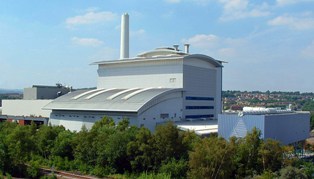
The government is seeking views on plans to widen the scope of its Renewable Heat Incentive (RHI) which would see more CHP incinerators and anaerobic digestion plants eligible for subsidy.
Under the 860 million incentive launched in March 2011 (see letsrecycle.com story), organisations will be rewarded for generating renewable heat and biomethane gas which can be injected back into the national grid, using equipment such as renewable heat pumps, and biomass boilers.
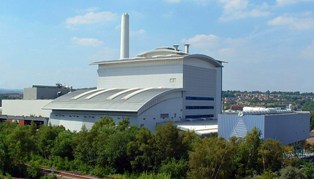
The Department of Energy and Climate Change (DECC) launched a consultation yesterday (September 20), calling for comments on plans to broaden the eligibility criteria for the types of waste that are included in the incentive.
The proposals would see heat generation through the incineration of commercial and industrial waste in combined heat and power (CHP) plants eligible for payments for the first time.
Subsidy
The generation of heat from CHP incinerators is currently supported in the RHI under the biomass tariff, but this only pays for the proportion of heat generated from the biomass in municipal solid waste. Other types of waste, including commercial and industrial waste, are excluded.
It is hoped that broadening the scope of the incentive could increase the number of eligible EfW facilities producing renewable heat, as DECC claims there are very few plants fed solely by municipal waste.
In addition, the Department is proposing that anaerobic digestion plants which generate more than 200kWth per year should be eligible for support for the biogas they produce. Support does currently exist for AD facilities within the RHI, but only for small-scale facilities producing less than 200kWth per year.
DECC also revealed that it will be launching a call for evidence into the inclusion of heat capture technology from landfill gas in the RHI, although the timescale for this has yet to be released.
The department says that EfW technology offers a cost effective source of renewable heat and it provides few environmental concerns as waste facilities are subject to the strict planning rules and environmental permits.
Consultation
DECCs consultation into expanding the criteria for EfW technology, which also includes plans to expand the scheme to include air to water heat pumps, was launched alongside consultations on proposed subsidies for domestic renewable heat installations, as well as expanding the non-domestic incentive scheme.
The launch of the consultations was welcomed by Paul Thompson, head of policy at the Renewable Energy Association, who commented: Renewable heat has been the sleeping giant of UK renewable energy policy. Renewable heat technologies are often very cost-effective, and have a major role to play in reducing our carbon emissions, improving our energy security, and revitalising our economy.
Related Links
We are delighted that the Government has published these proposals on time and we are looking forward to engaging further with DECC on the details to make the RHI work.
The consultation into broadening the eligibility of EfW in the RHI runs until October 18.

Register for free to comment