
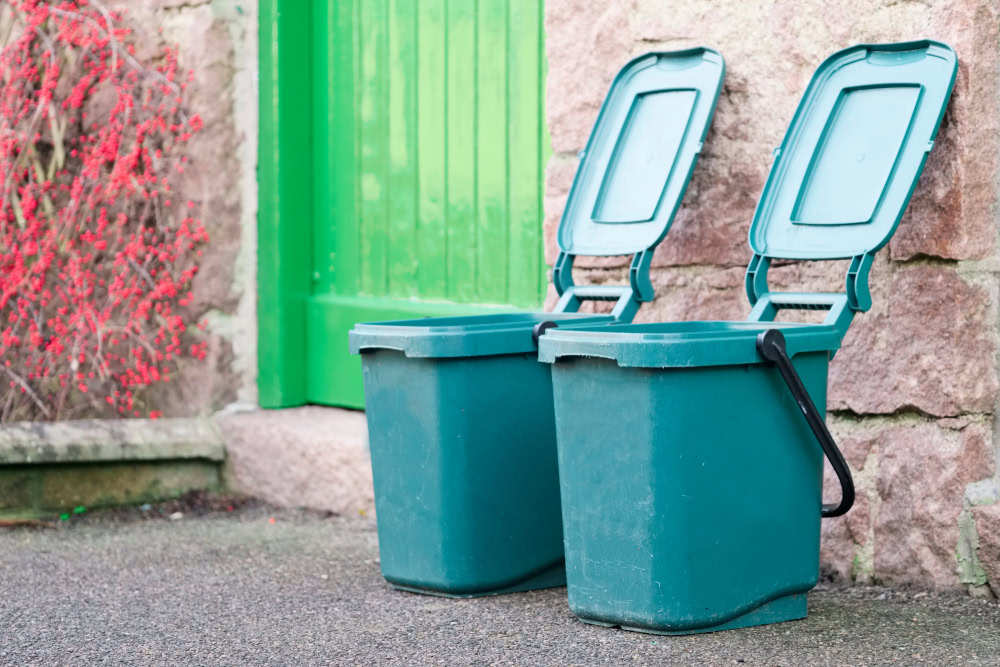
Under the arrangement, food waste collected from residents will be taken to Bio Capital’s Warrens Emerald Biogas anaerobic digestion (AD) facility in Newton Aycliffe.
The facility will then convert the waste into renewable energy for local homes and businesses.
As well as generating electricity and heat, the AD process produces compressed natural gas (CNG) for use as a transport fuel, alongside digestate which can be used as an organic fertiliser on farmland.
Libby McCollom, Darlington Council’s cabinet member for local services, said: “I am delighted that residents, businesses and local farms can directly benefit from the introduction of food waste recycling in Darlington.
“At the same time as starting food waste collections, we have also simplified our general recycling collection and made them weekly, making it as easy as possible for residents to recycle more.”
Food waste collection under Simpler Recycling
The agreement comes as councils across England adapt to the government’s Simpler Recycling reforms, which require separate household food waste collections.
Bio Capital said the partnership will help Darlington comply with the new statutory requirements while ensuring waste is processed close to where it is collected.
Darlington was supposed to introduce food waste collections on 31 March 2026, but have delayed due to a delay with a supplier. Collections instead began on 2 June.
Iain Pickles, Head of Commercial at Bio Capital, added: “We’re proud to be working with Darlington Borough Council on something that feels genuinely significant.
“Simpler Recycling has brought households into this system in a way we haven’t seen before, the scale of participation is new, and that means the scale of impact can be too.
“Food waste has always had value. In Darlington, that value doesn’t stop at the gate of our facility. It goes, back into homes and businesses, and back into the farmland that feeds communities.”
According to the company, using the nearby Newton Aycliffe facility is expected to reduce transport-related emissions compared with sending material further afield.

Register for free to comment